Art workshops and storytelling for inpatients on a neurorehabilitation ward, living with brain injury or neurological condition

We ran six sessions of ‘A Creative Transformation’ (from May 6 – June 10, 2025) for inpatients at the Neurorehabilitation Unit, which is part of the National Hospital for Neurology and Neurosurgery (UCLH NHS Trust). 6 patients joined these sessions, which were facilitated by Lorna Collins (ACT project lead, lived experience), Frances Newman (Visiting artist, NRU) and shadowed by Shuzhai Qin (UCL researcher). The sessions were joined and supported by members of the NRU multidisciplinary team – it was very much a team approach, built flexibly around patients individual, changing needs.
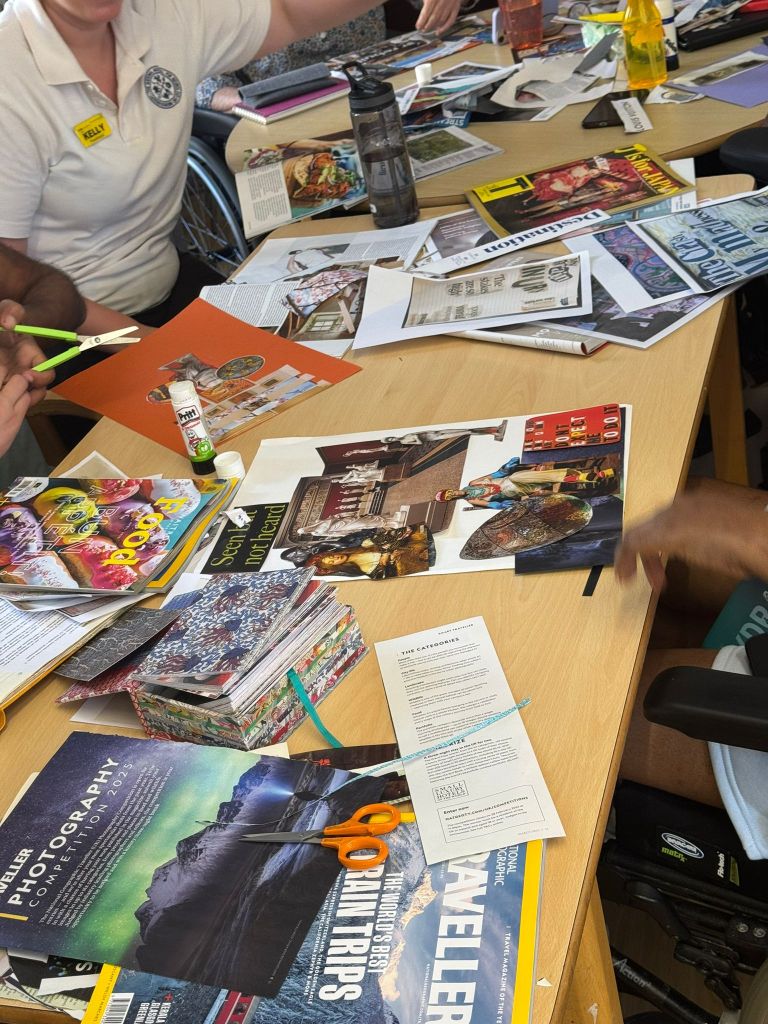
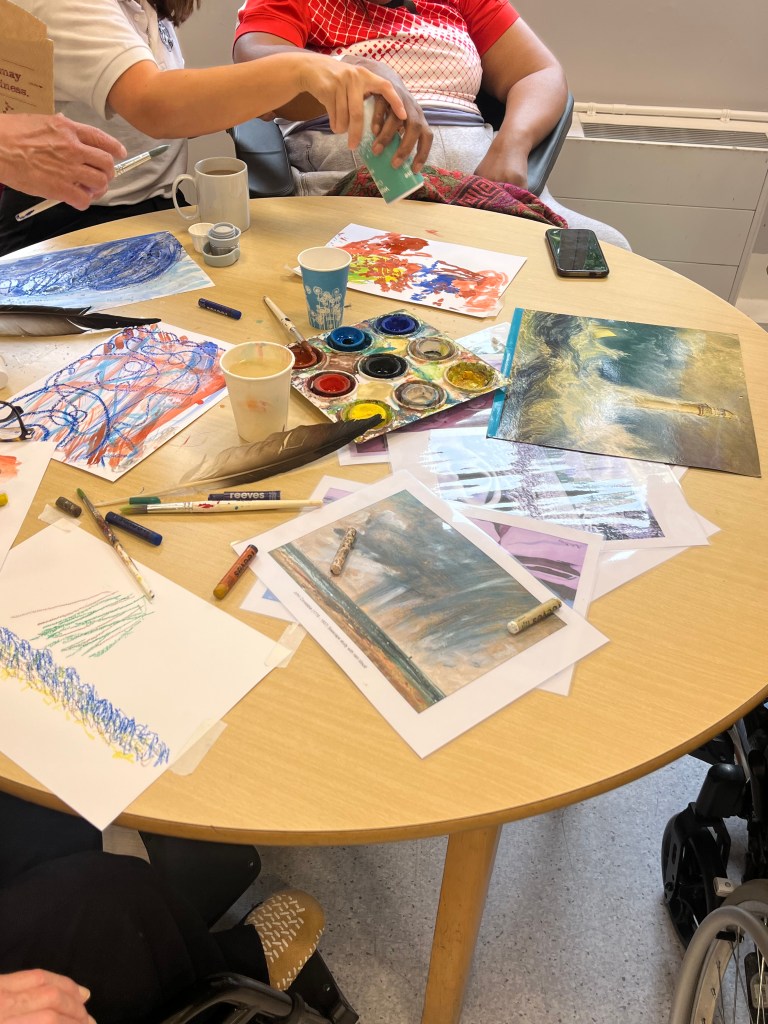
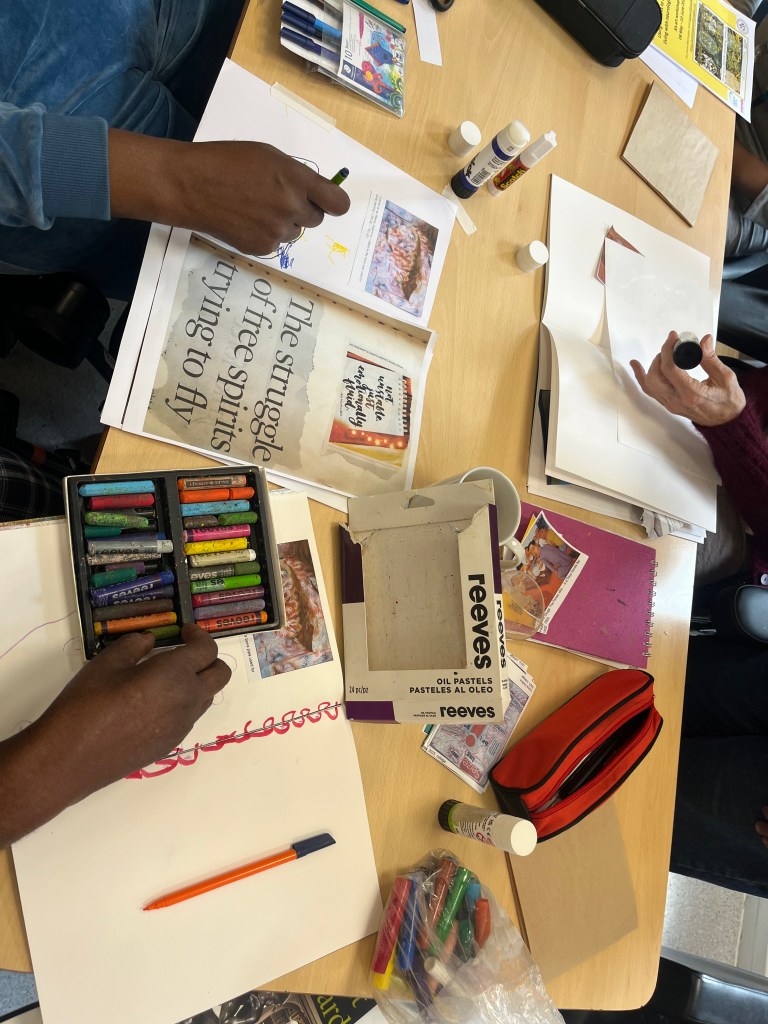
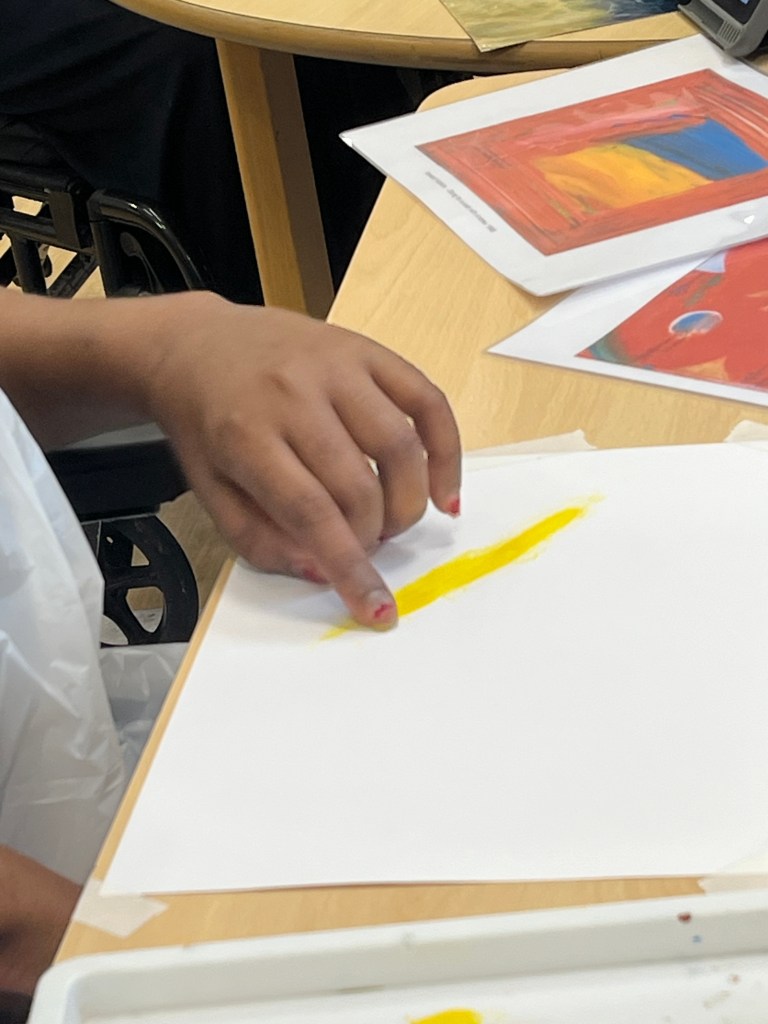
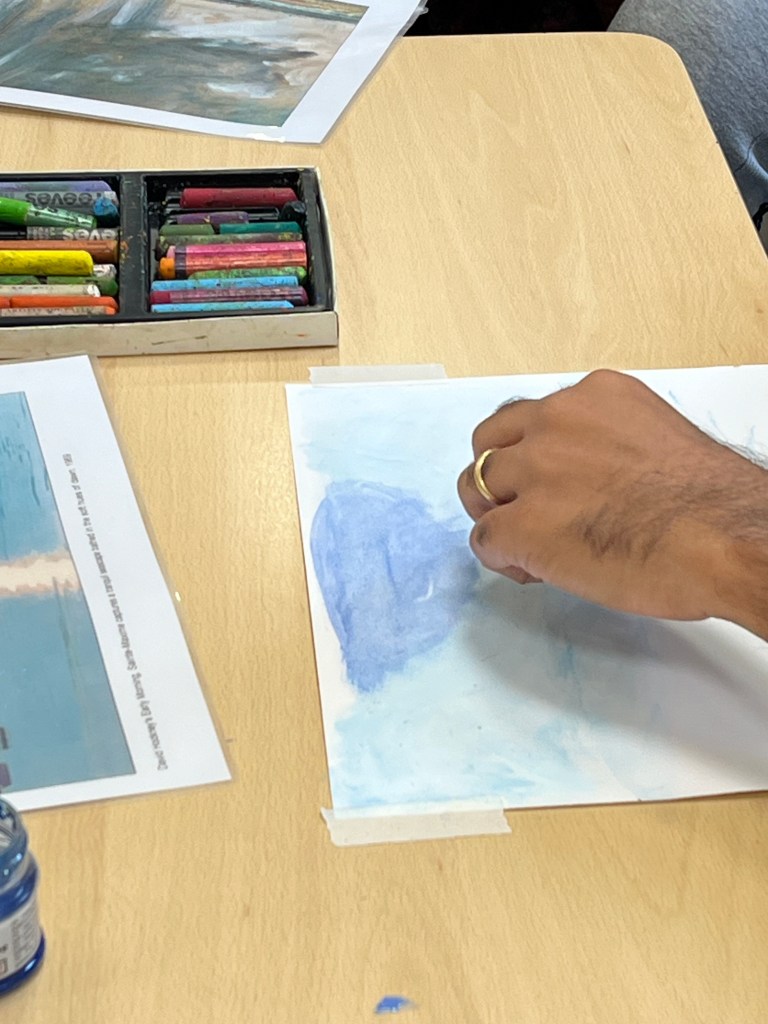
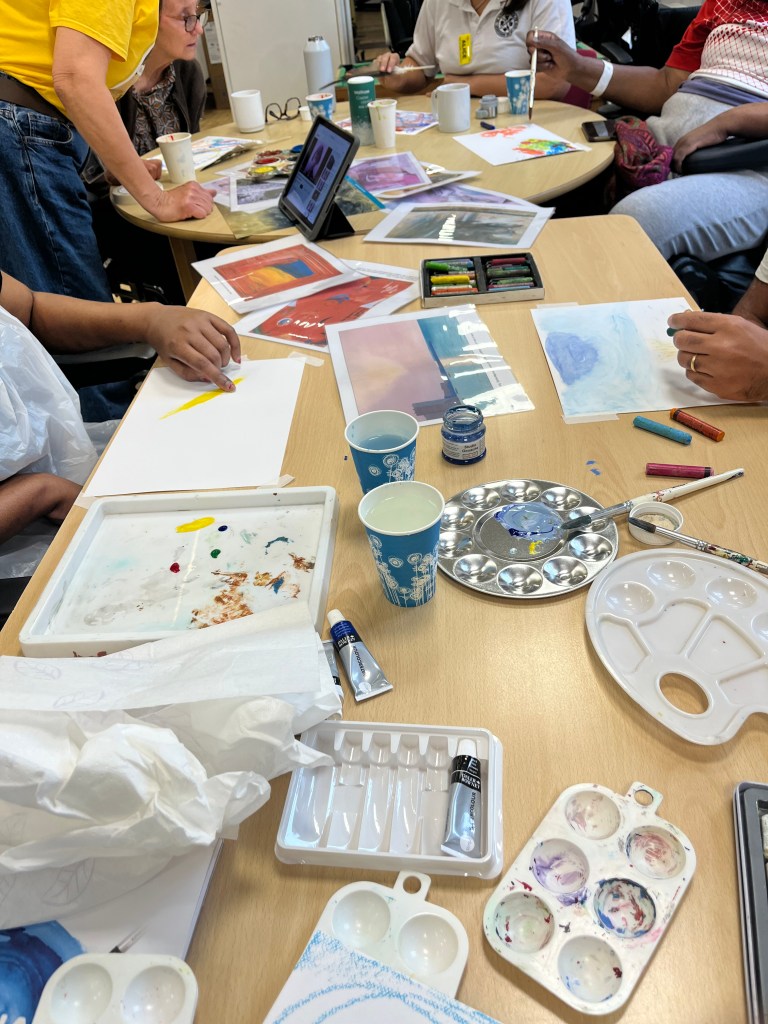
Summary of the sessions:
Session 1: What is art? Using the symbol of a hand in human history, individual marks were put down on paper and in clay.
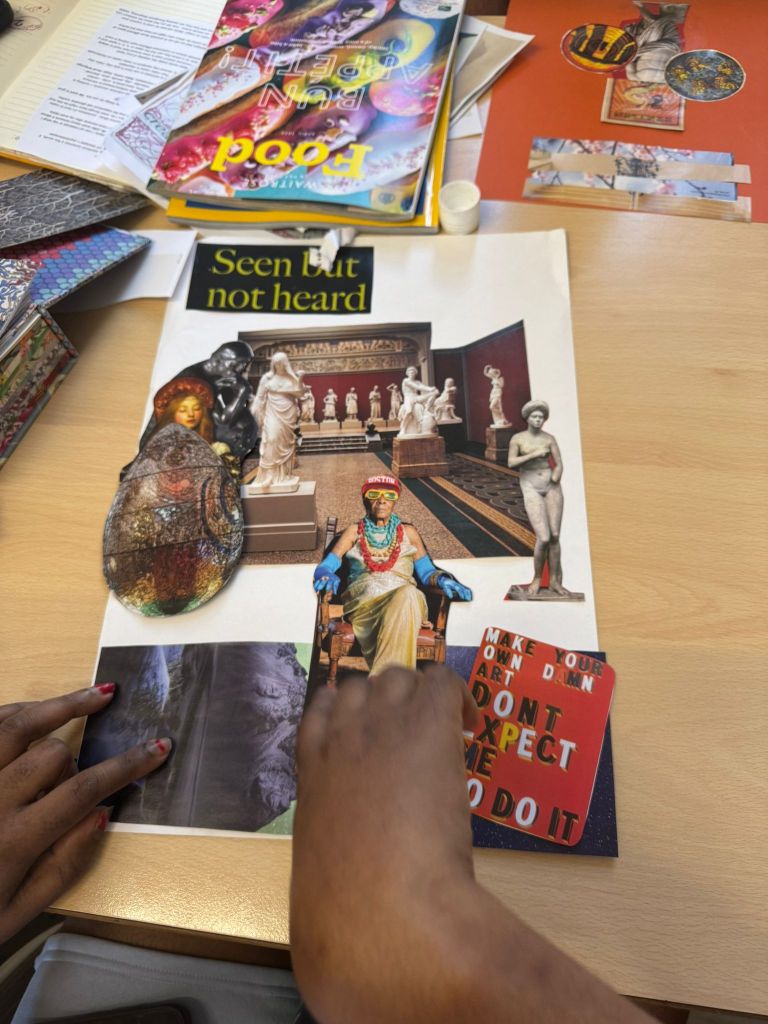
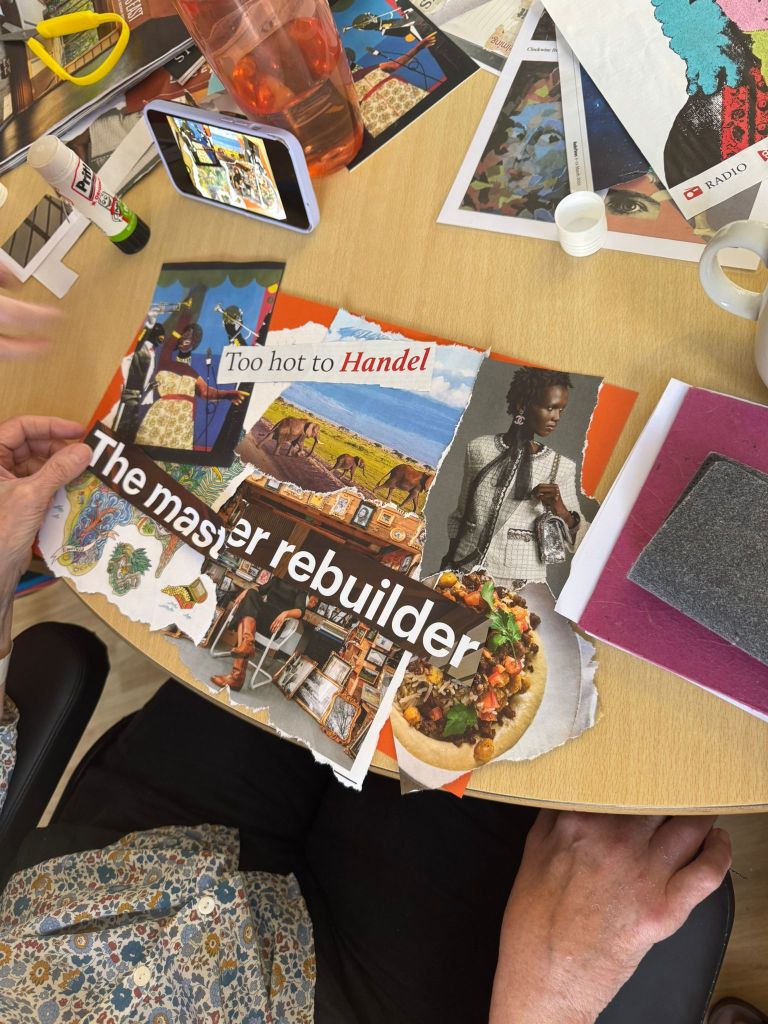
Session 2: Make a collage from newspapers and magazines – what is my story? A collage exercise allowed for patients to select and re-arrange printed material from the world around us in a way that was significant to them.
Session 3: What can I see or sense? A collaged box invited an exercise that focused on our five senses and prompted language to become a song.
Session 4: How can I unlock my imagination? Music became a backdrop for experimenting with watercolour paint.
Session 5: How can I express myself, my story? Using a line to begin to tell and share personal stories.
Session 6: What do I need now? Consolidating these experiences by pasting the work produced into individual journals with many more blank pages waiting to be worked upon going forward.
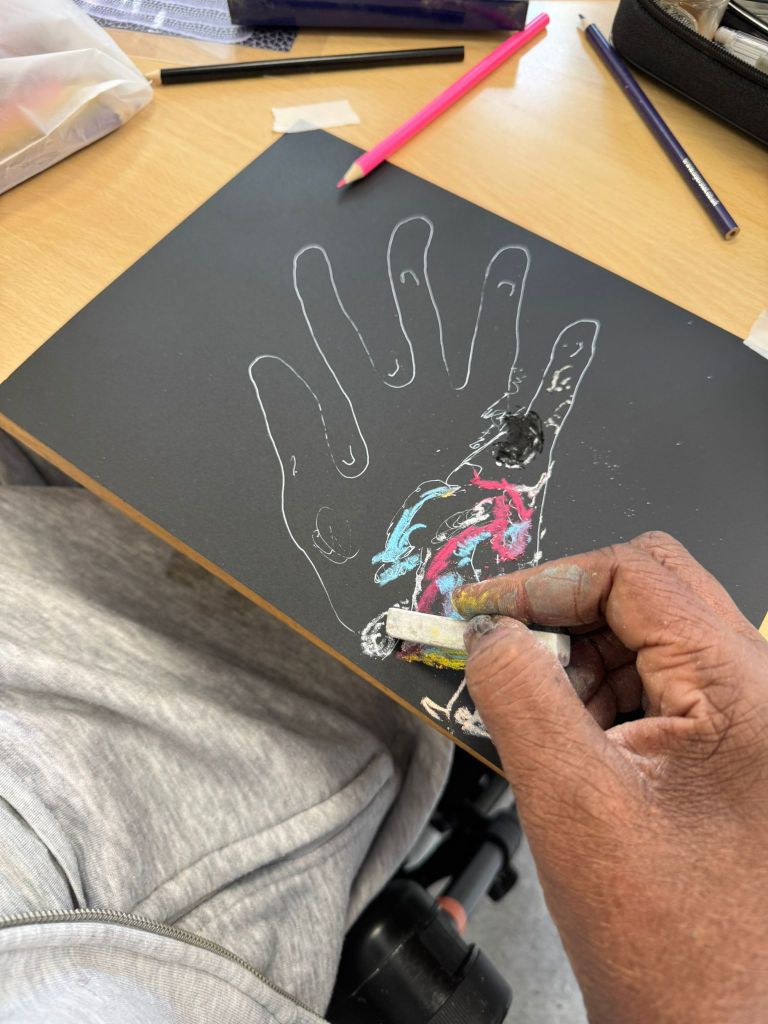
These sessions blended opportunities for personal expression with group connection, reinforcing the therapeutic power of art and storytelling in recovery. A strong sense of togetherness and emotional expression developed amongst the patients. They showed growing independence, comfort, and interest in each other’s stories, contributing to group cohesion. Patients effectively used art to tell their stories, and this activity promoted healing, connection, and self-reflection. Each week, the group dynamic strengthened significantly, with increased openness, communication, and emotional safety. The sessions became increasingly marked by hope, creativity, and a shared sense of progress; for example, in week five, many artworks ended with “to be continued,” symbolizing ongoing journeys.
The workshop plan was built through a series of exercises, each of which had a spectrum of choices designed to meet particular needs, to give participants the confidence and an understanding of the value of creativity. By bringing the participants together in a safe and supported environment to share this creative journey, a sense of comradery developed, together with a sense of celebration. Working in a group setting and having a shared space for creativity brought out something unique in the participants, and they appreciated the collective experience.
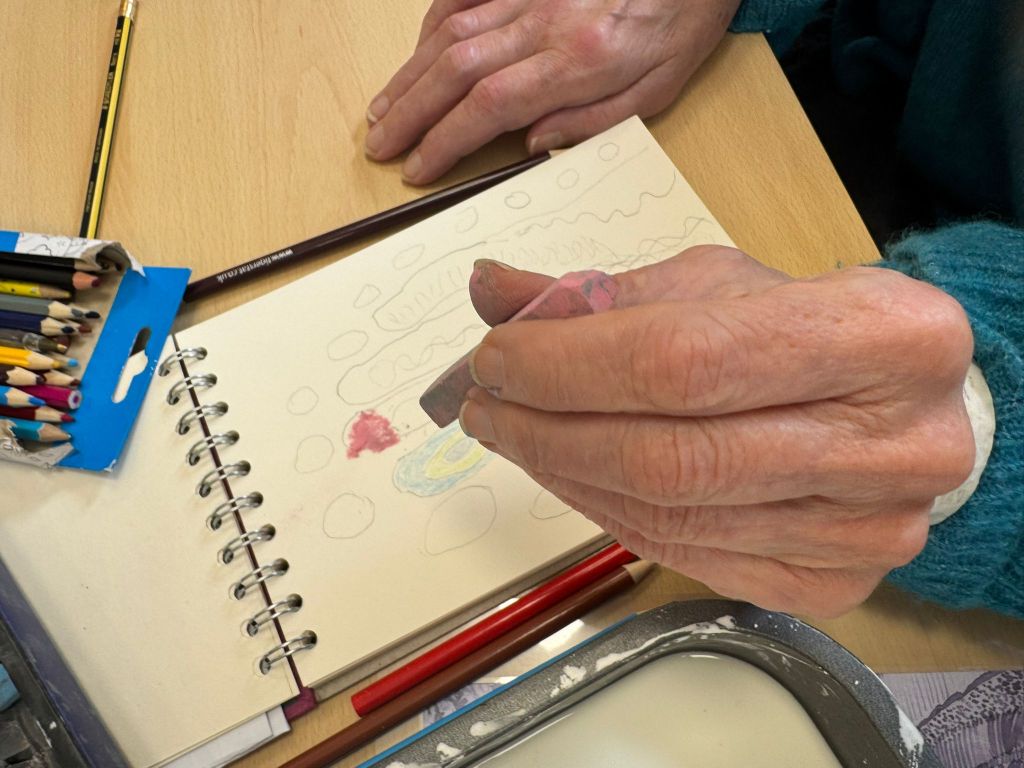
While some participants needed more hands-on guidance, such as modelling the drawing techniques, the group showed growth in how they engaged with tasks over time. It was important to keep a balance between abstract concepts and concrete actions. Some participants struggled with the conceptual aspects, but by demonstrating the tasks and providing clear visual models, facilitators were able to bridge that gap. This approach allowed participants to grasp the task better and engage meaningfully in the activities. It was important to provide the right level of scaffolding for each individual; different participants required different amounts of support. The approach taken was adjusted according to individual needs, such as giving more prompts or modelling certain actions.
Quotes, feedback from patients:
Patient 1:
“It takes my mind off the many things that are bothering me.”
“It was very relaxing”.
“My true colours are shining through.”
“I love colours, I am a make-up artist. This reminded me of my work and being able to use my hands, as I’m not able to use them much at the moment. But I can see that I will be able to do this in the future.”
Comment on the group: “Enjoyable, expressive, stimulating, fun, rewarding, calming, relaxing”. “It’s been amazing. I’ve enjoyed every bit of it. I’m going to miss the group.”
Patient 2:
“I do enjoy. Nice, very nice. Express my mind. Very colourful. Drawing what’s on my mind.”
“Half my body is not working […]. Yeah, I did it!”
“It’s nice to be here. I’m making myself.”
“My shoulder pains me. I am telling the story of the pain.”
“Happiness.”
Comment on the group: “Enjoyable, time consuming, meaningful, rewarding, expressive, relaxing, calming”. “It has helped me a lot. It helps me express everything I see and every part of the pain and my difficulties.”
Patient 3:
“I’ve never drawn before. Surprised myself.”
“I enjoyed the session.”
Comment on the group: “Enjoyable, expressive, stimulating, meaningful, confusing.” “Good. I will carry on with my art.”
Patient 4:
“Yes… everything is good. This is art. I am enjoying making art and being in the group.”
Comment on the group: “Enjoyable, expressive, stimulating, fun, meaningful, calming, relaxing”.
Patient 5:
“It helps me express myself.”
Comment on the group: “Enjoyable, time consuming, stimulating, fun, meaningful, rewarding, relaxing”. “Amazing, happy, relieves stress. Meaningful – sharing stories.”
Feedback from staff:
“The group I joined (music and art) was brilliant, I could really notice patient engagement with their art and with the music on in the background. […] I enjoyed participating in creating art myself and I felt this helped stimulate discussion and engagement with patients, making it feel like a joint activity.”
“It made me stop and reconnect with patients a little more, which only helps us work with patients better.”
“It was just so nice to work with other people not under my caseload. Learn more about them and it makes a difference when you’re walking past someone in the day room now and you’re like, oh, hello. Like we know each other from the group, and you’re not just a strange face. I think anything that kind of facilitates that connection building as well is really good in a rehab context.”
“It pulled the team and the patients together. I think it might have an impact on our goal sets as well…they’ve discovered new strengths or new interests.”
The future: what we are offering now
We offer to run this template of ‘A Creative Transformation’, which is 6 groups, with 4-6 patients, working closely with the team at the Neurorehabilitation Unit. The template is a partnership and collaboration between Lorna Collins (lived experience, artist), Frances Newman (the artist based on the ward), and psychologists and therapists on the MDT (e.g. speech and language, OT, physiotherapists, social workers, students). Lorna Collins offers a unique professional skill set as an artist with lived experience in this setting(neurorehabilitation), having had a severe traumatic brain injury and utilised art to support her recovery, rebuild her identity and her life. This perspective sustains and directs the content of ‘A Creative Transformation’, allowing patients to connect, also bringing empathy and hope.
In the context of working on Level 1 care with challenging patients who have very complex needs, the ACT groups are resource heavy because they bring forward an approach that incorporates and draws together different members of the ward MDT, supporting and enhancing psychology and therapy teams’ work with patients. This project is then a clinical intervention to help patients achieve goals. These goals may be set by other therapists, in different settings, as part of the aims of their treatment and in accordance with their specific needs and situation. Or they may emerge during the ACT groups, when patients discover things they can or cannot do, or want to do, or need to do more easily.
To be continued…
 A Creative Transformation