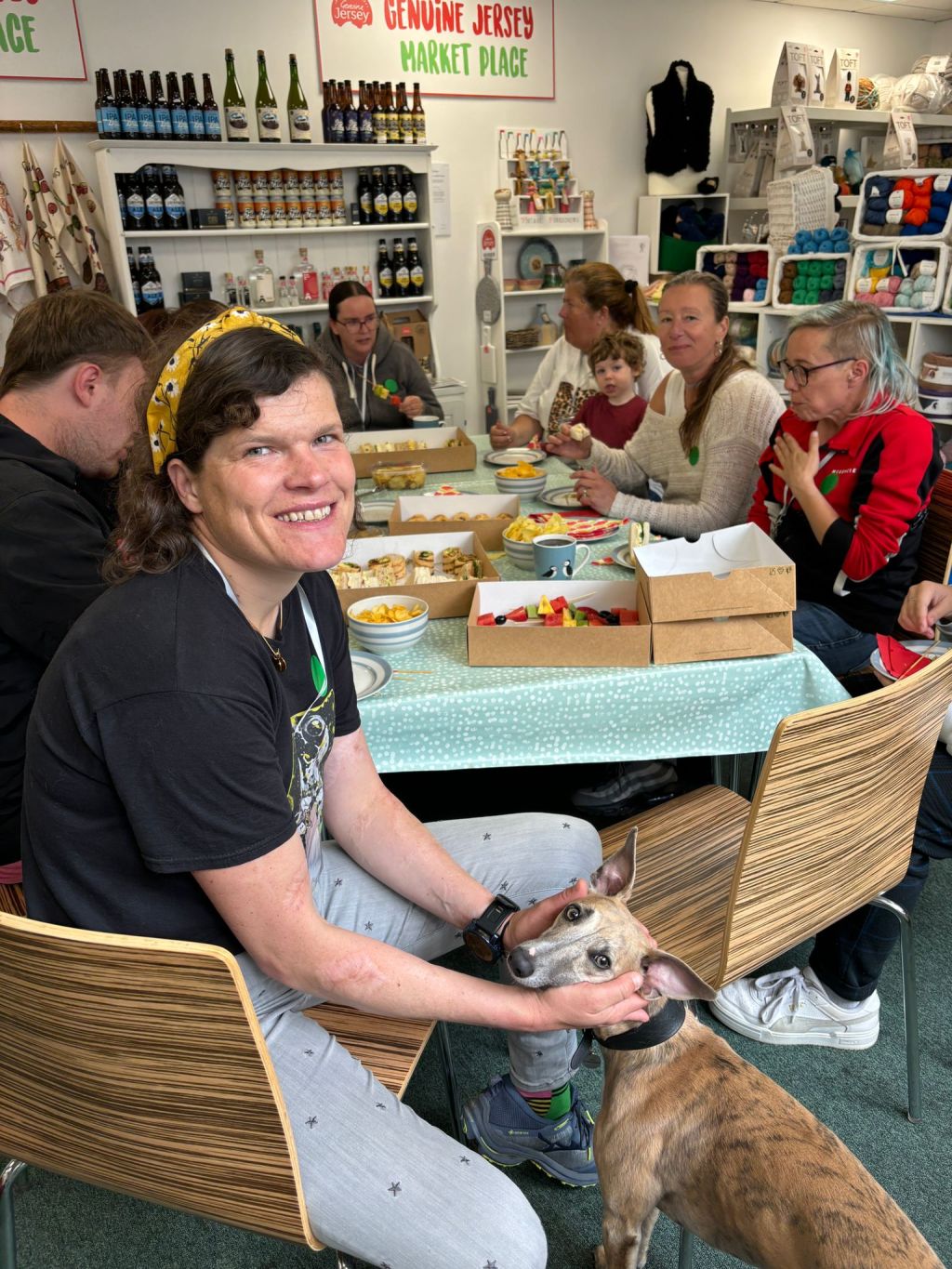
Art workshops at Harbour Gallery, Jersey, 08-09 July, 2024
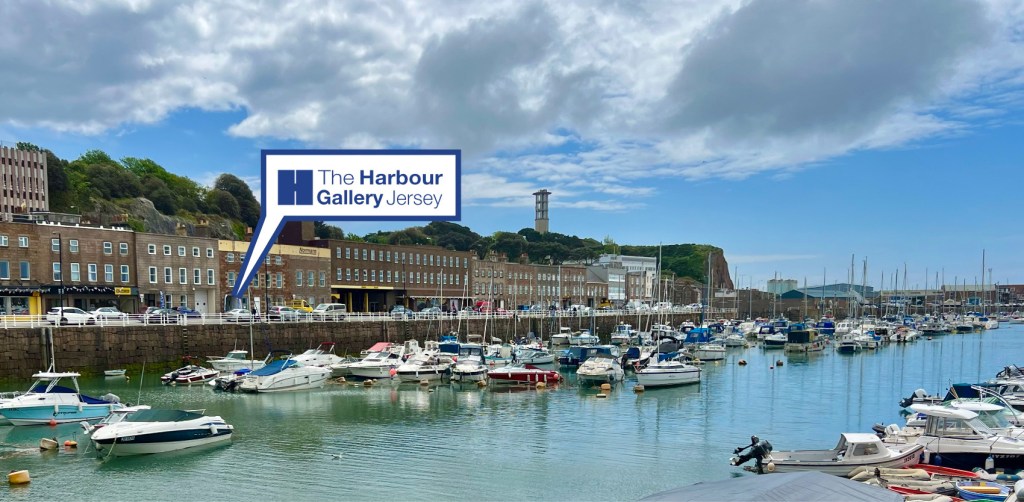
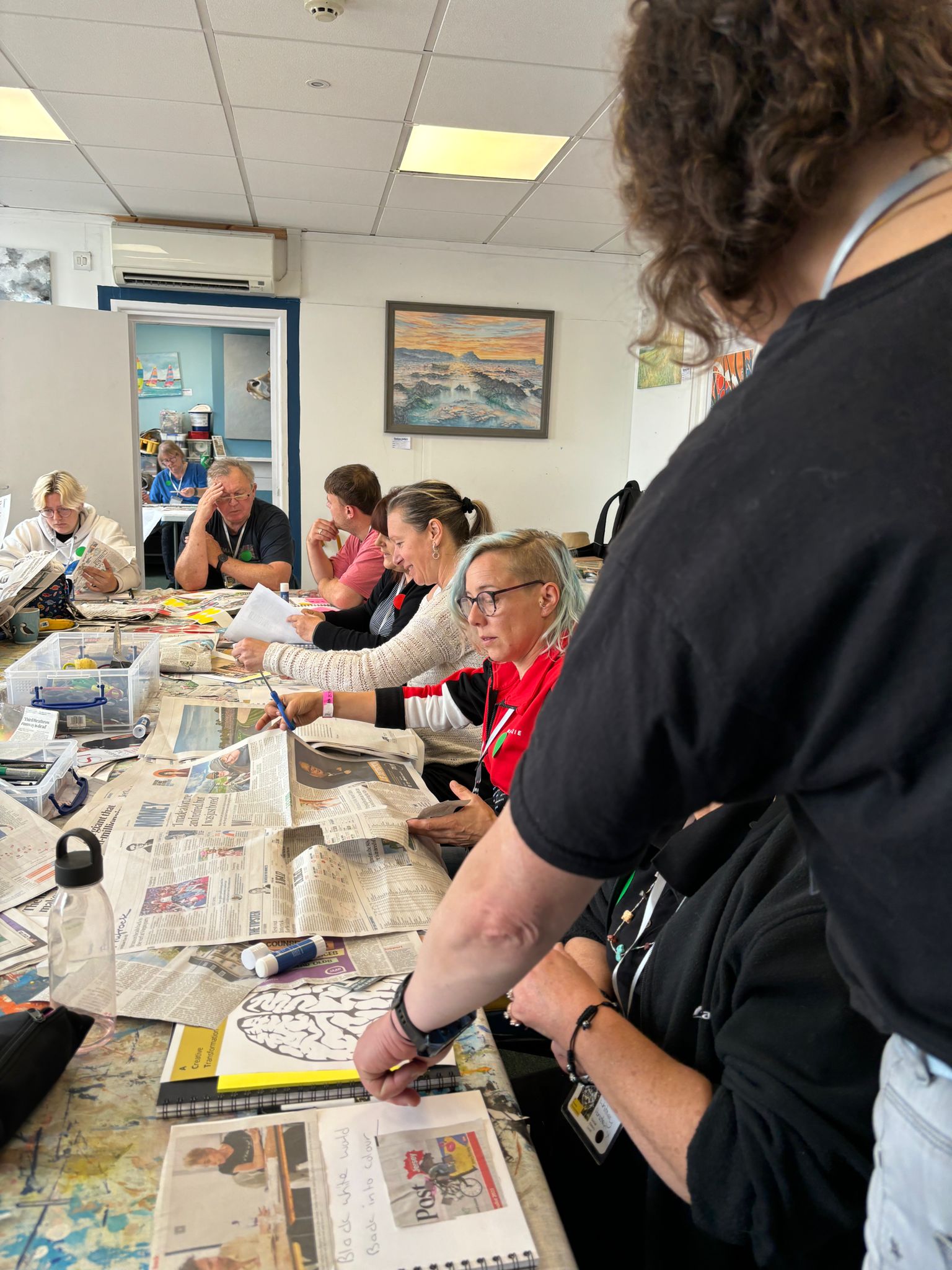
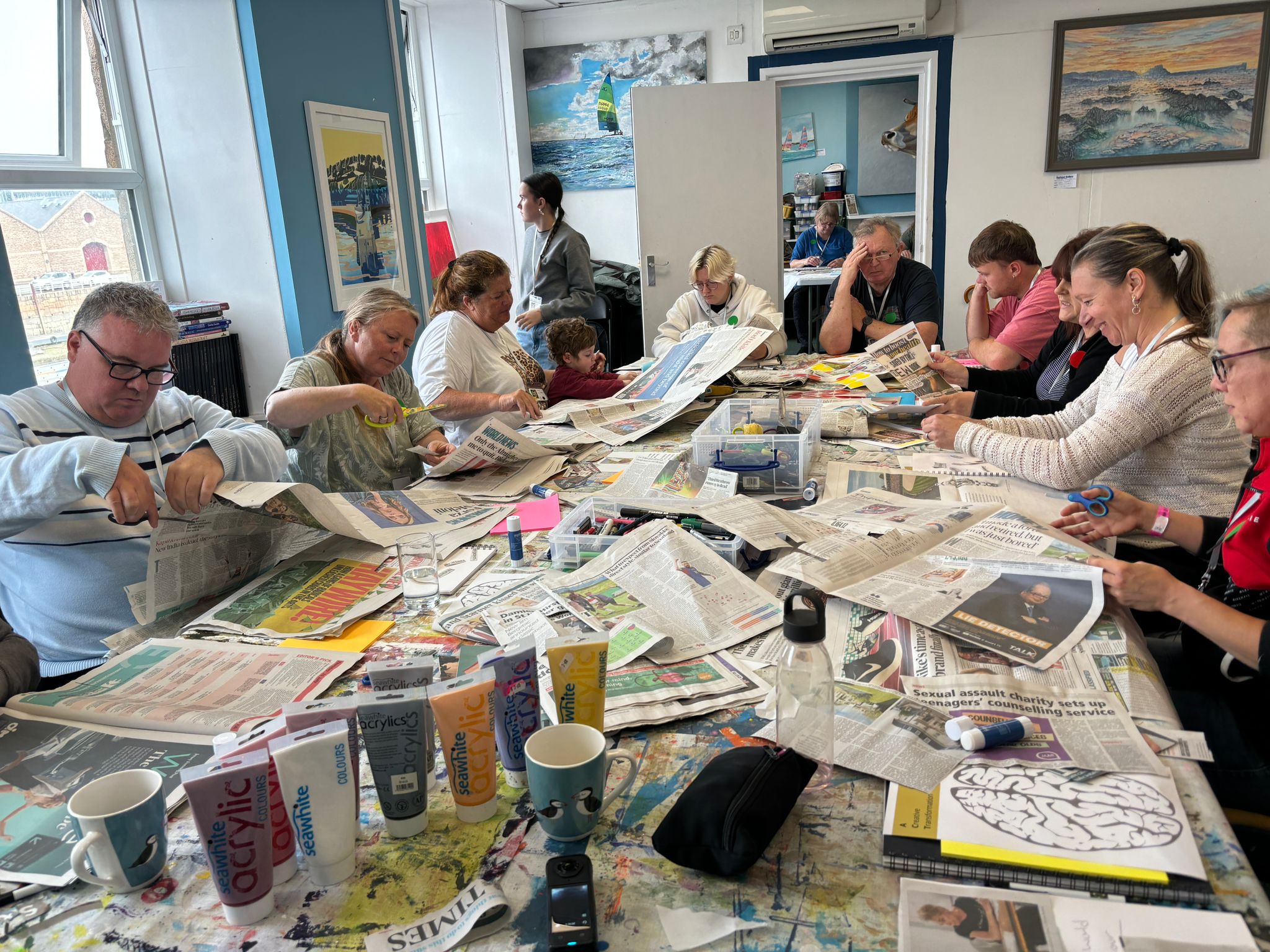
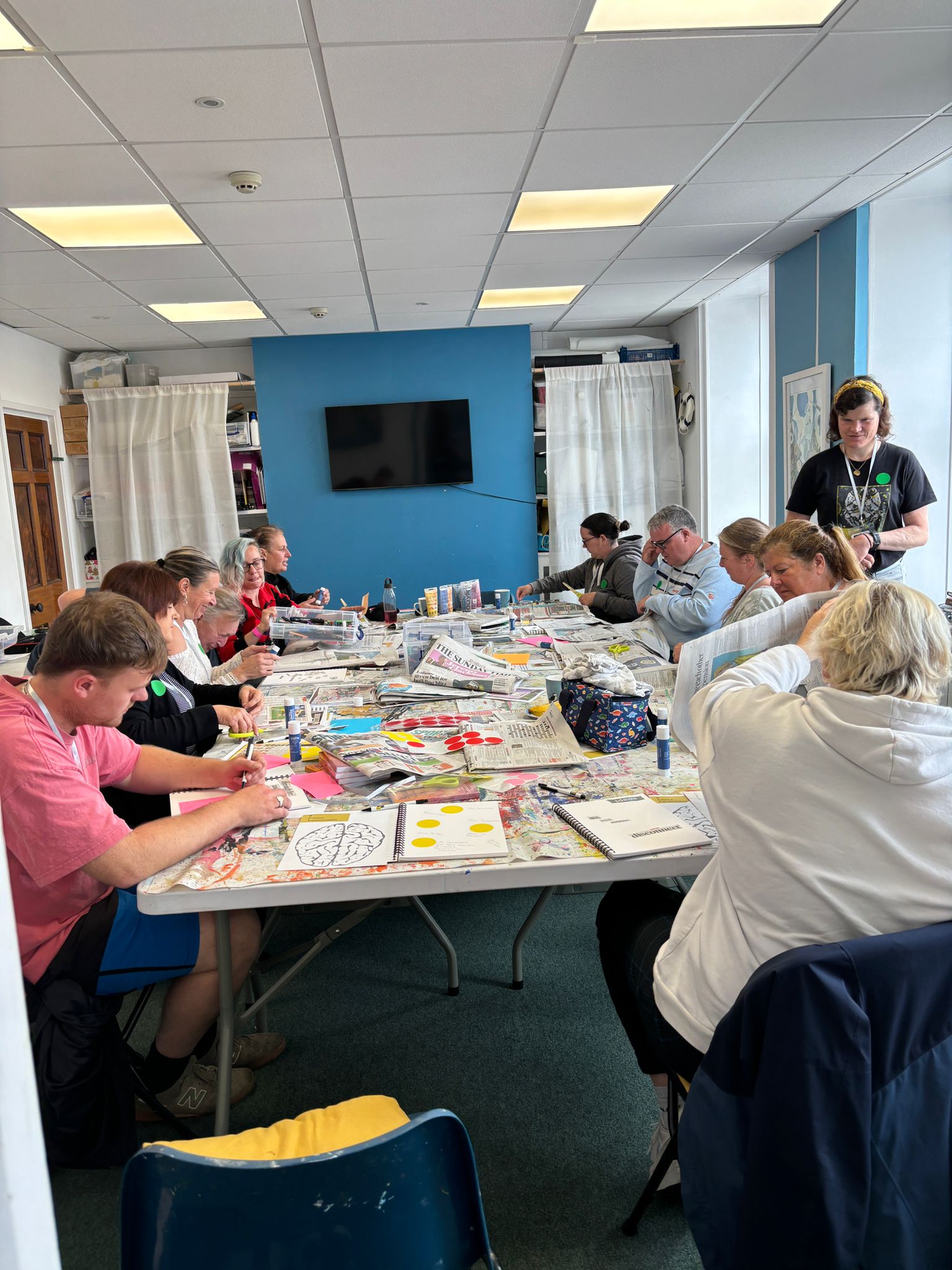
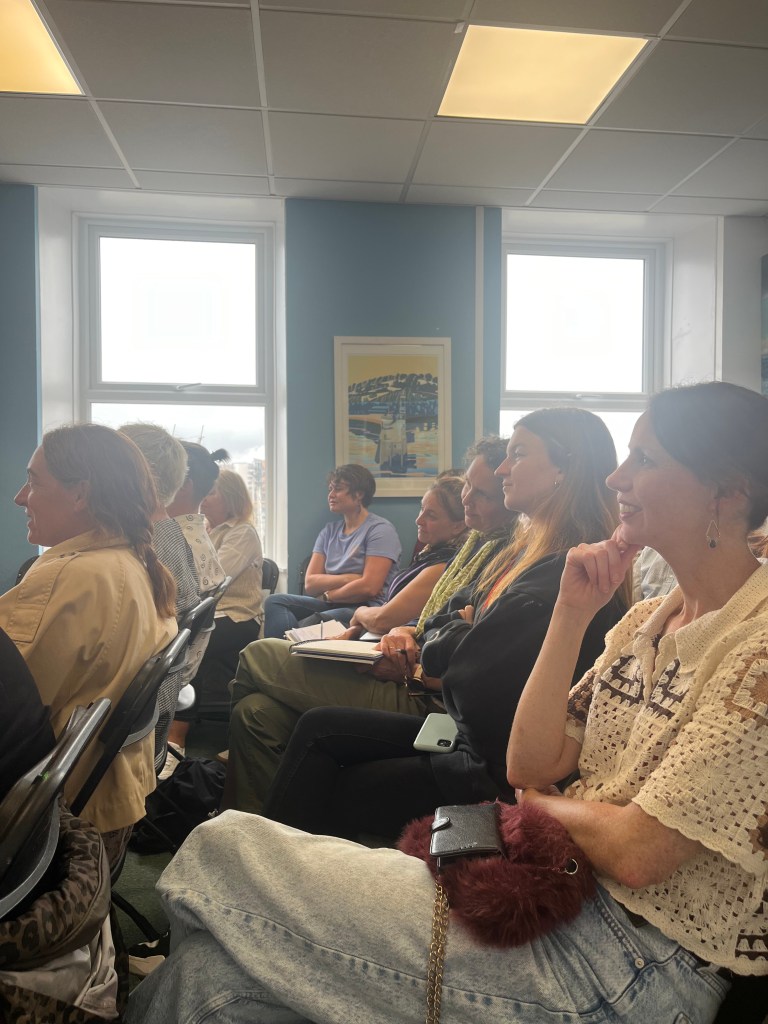
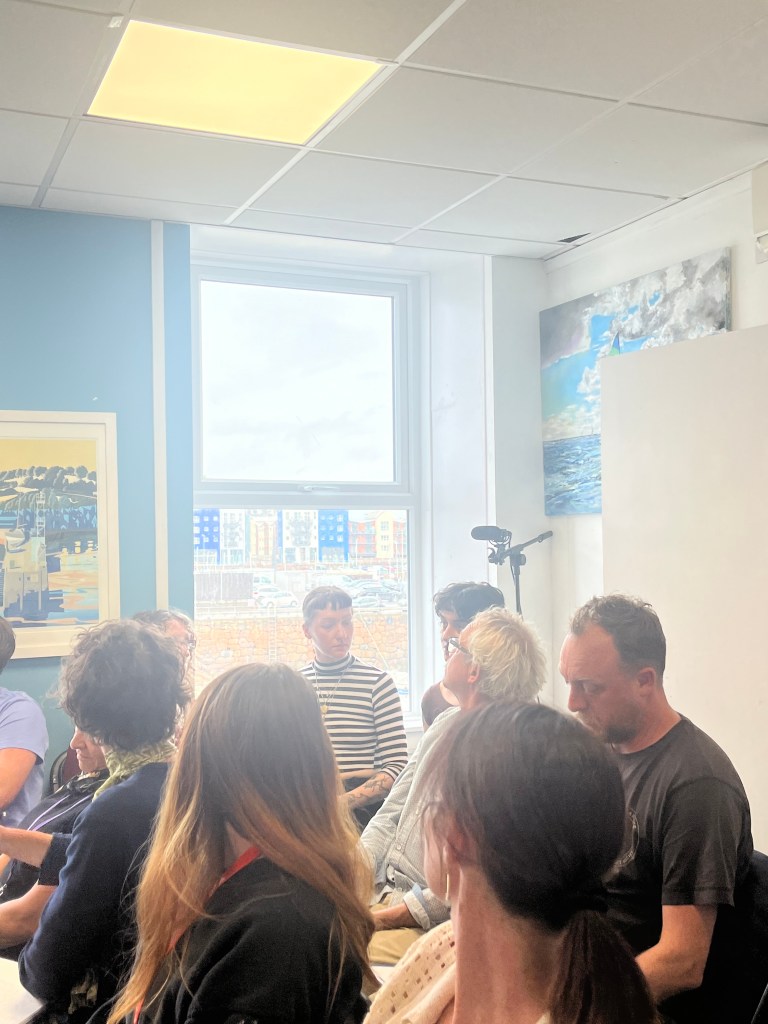
The creative art workshop for people with lived experience was held at the Harbour Gallery, by the docks on the shorefront in Jersey. The room was packed full of people, with enough space to make art. We were at capacity, beyond capacity, full of capacity – A Creative Transformation nexus.
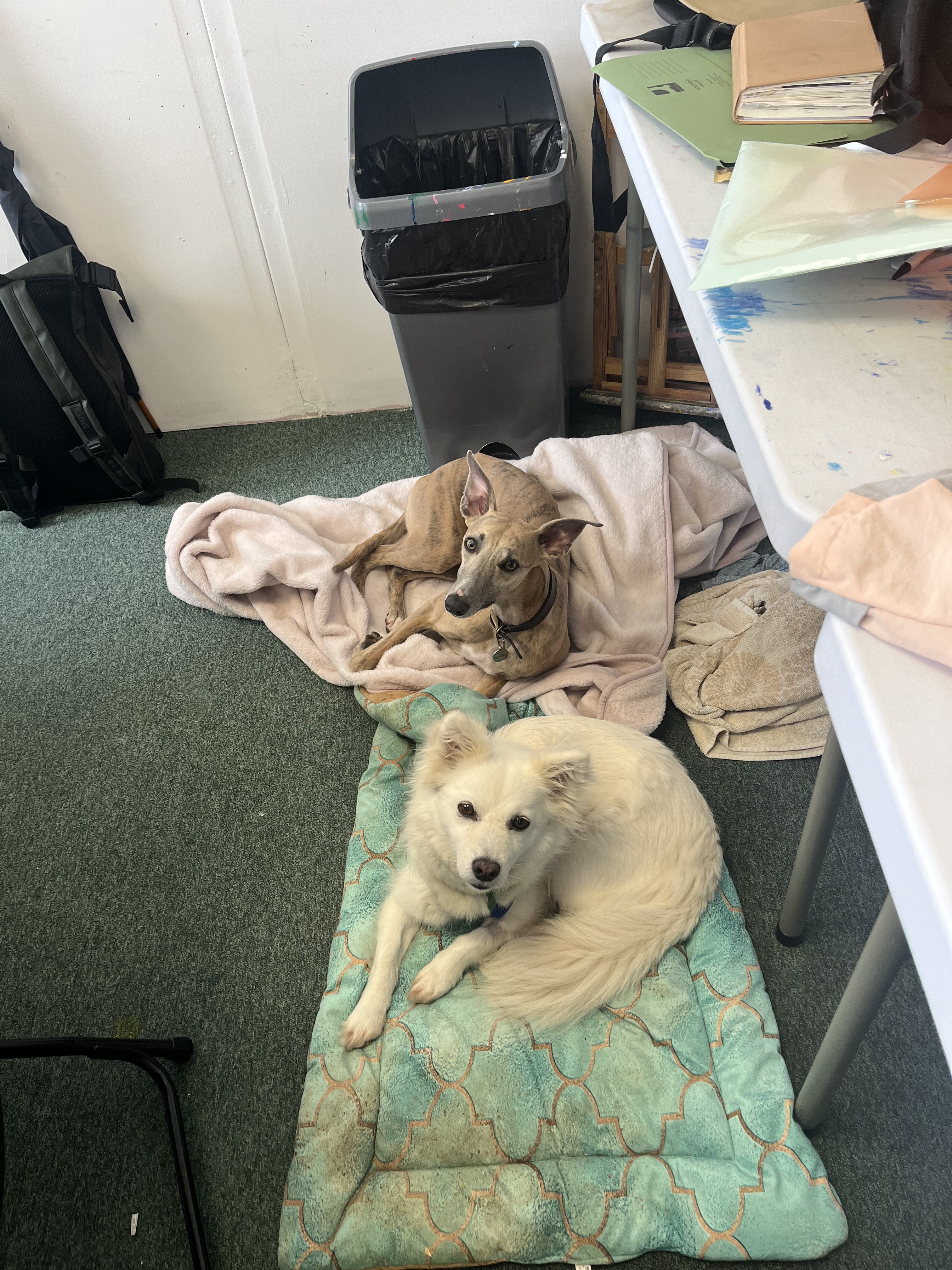
The participants were incredible. Many of them had neurological conditions as well as mental illness. Throughout the workshop, everybody opened up and some said things they had never said before. I introduced myself and my dogs (the real stars of the show, who had come over to Jersey with me), Wilby and Foxy, extraordinary therapy dogs – so compassionate, gentle, kind and calming. Foxy lay underneath the table, oozing tranquillity. Wilby pottered around making sure that everyone was okay.
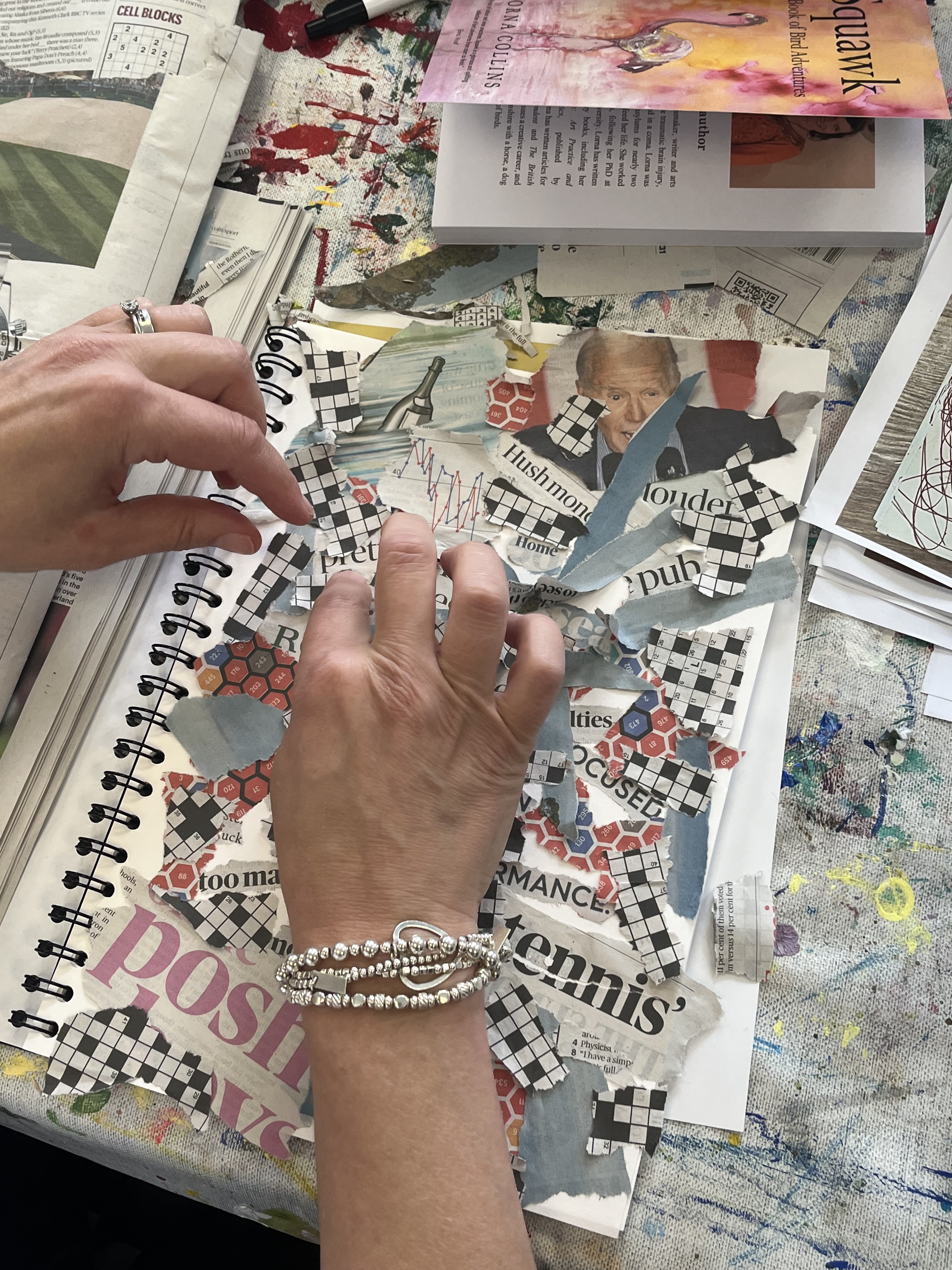
I showed my film, and everyone seemed to be gripped by it. Then I introduced the first exercise, which was to make a collage. People ripped up bits of newspaper and stuck them together in their own way. I went around the room and spoke with everyone individually, making connections. We formed a community within the room. It was incredibly powerful to see how my story touched their stories, how they could relate and how they were feeling in themselves and how showing the film and doing this workshop was allowing them to express themselves in a new way. A Creative Transformation.
This transformation was evident in the way people generated a capacity to be open, tell and share their stories. The process of being creative allowed people to raise themselves, feel connected, valued and better. Not a hierarchical or judgemental kind of better, but in a lifted sense. Everyone seemed to love the exercise of during the collage. People really engaged with the activity, I hardly had to do anything. I just chatted with people. We shared our stories.
Several people in the room had functional neurological disorders, and they spoke about no one understanding – neither physical health mental health practitioners ‘get’ it; they are just told they are ‘making it all up’.
We talked about diagnosis medication and coping. Some people had never spoken to anyone about these things before. I felt like the workshop was providing groundbreaking moments for these people. We had a range of ages – the youngest person was 18 months old, the oldest person was in their late 60s.
Before lunch, several participants came with me to take the dogs for a walk down to the harbour and back. This provided another opportunity to connect and chat, extending our community.
It was pouring with rain, but this did not dampen the spirit. I felt a wonderful, intuitive empathy with the people around me. One person said that when I went near her, she had goosebumps; she could feel my aura. Someone else said that I exuded calmness. People said how much they valued being around me and what I said. I was the one who felt validated, being around these people – such incredible participants, so open, so giving, so compassionate and so very creative.
These are people who cannot afford to spend £50 to go and see their GP, they cannot afford to pay for education, they live in very poor parts of the island, they are deprived, they go hungry. They suffer greatly from mental illness and cannot afford treatment. They come to an art class with Dawn every week.
All participants at the workshop are artists and volunteers from ‘Art in Focus’ workshops that run twice weekly — a partnership project between the charity ‘Focus on Mental Illness’ and ‘Art in the Frame’ foundation. The Harbour Gallery, our location, is a hub for people who suffer from mental illness and who are also artists.
We got wet on the walk down to the harbour, but it was nourishing all the same. I connected everyone who came. We chatted about life and art and health and illness and trying to be well live well and make art.
We wandered back to the gallery. It was just as we had left it – people were making their collages, calmly and meditatively, in the room. People were pleased to see Wilby and Foxy again. And then we had lunch. We had sandwiches and crisps and fruit.
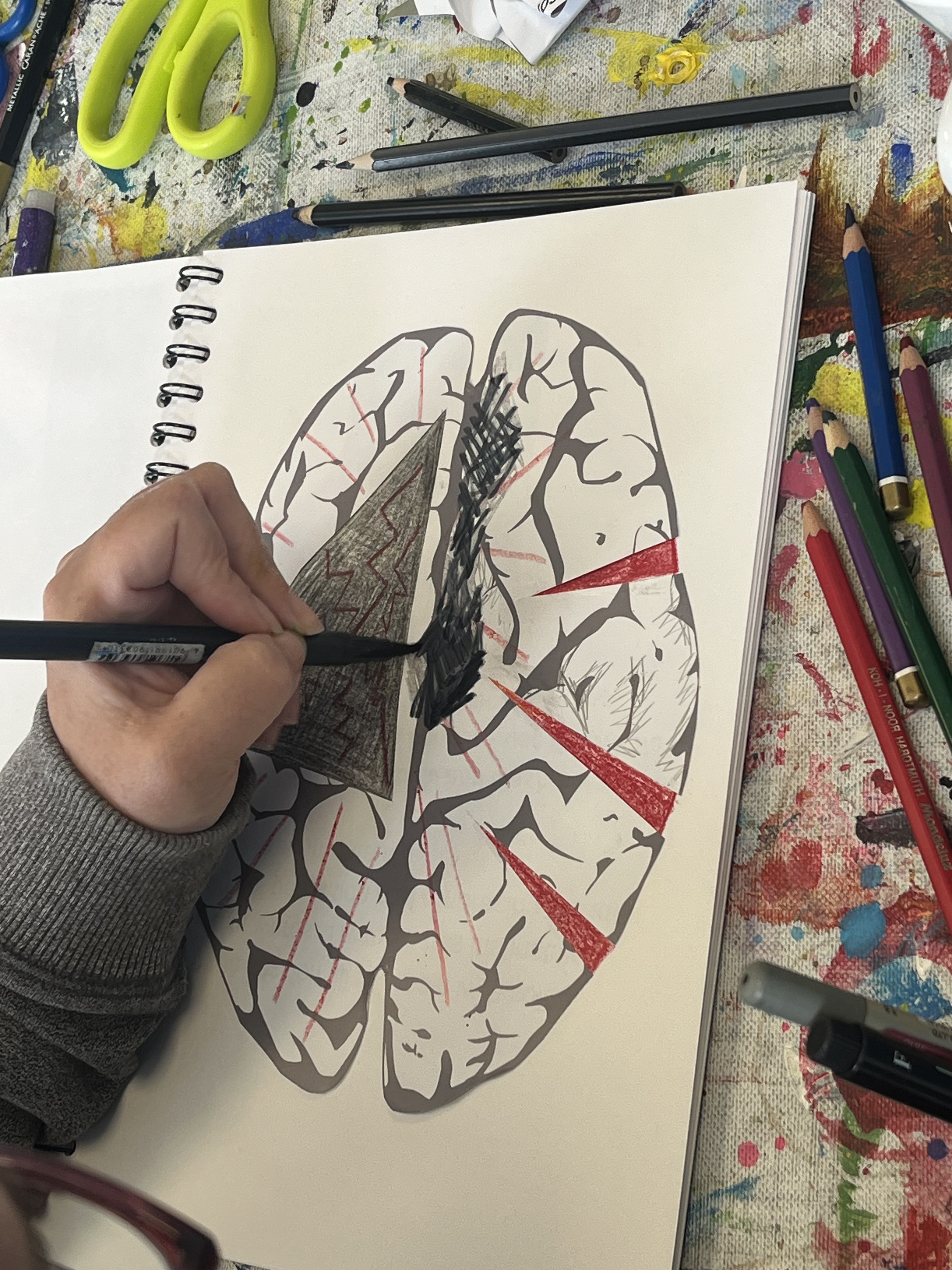
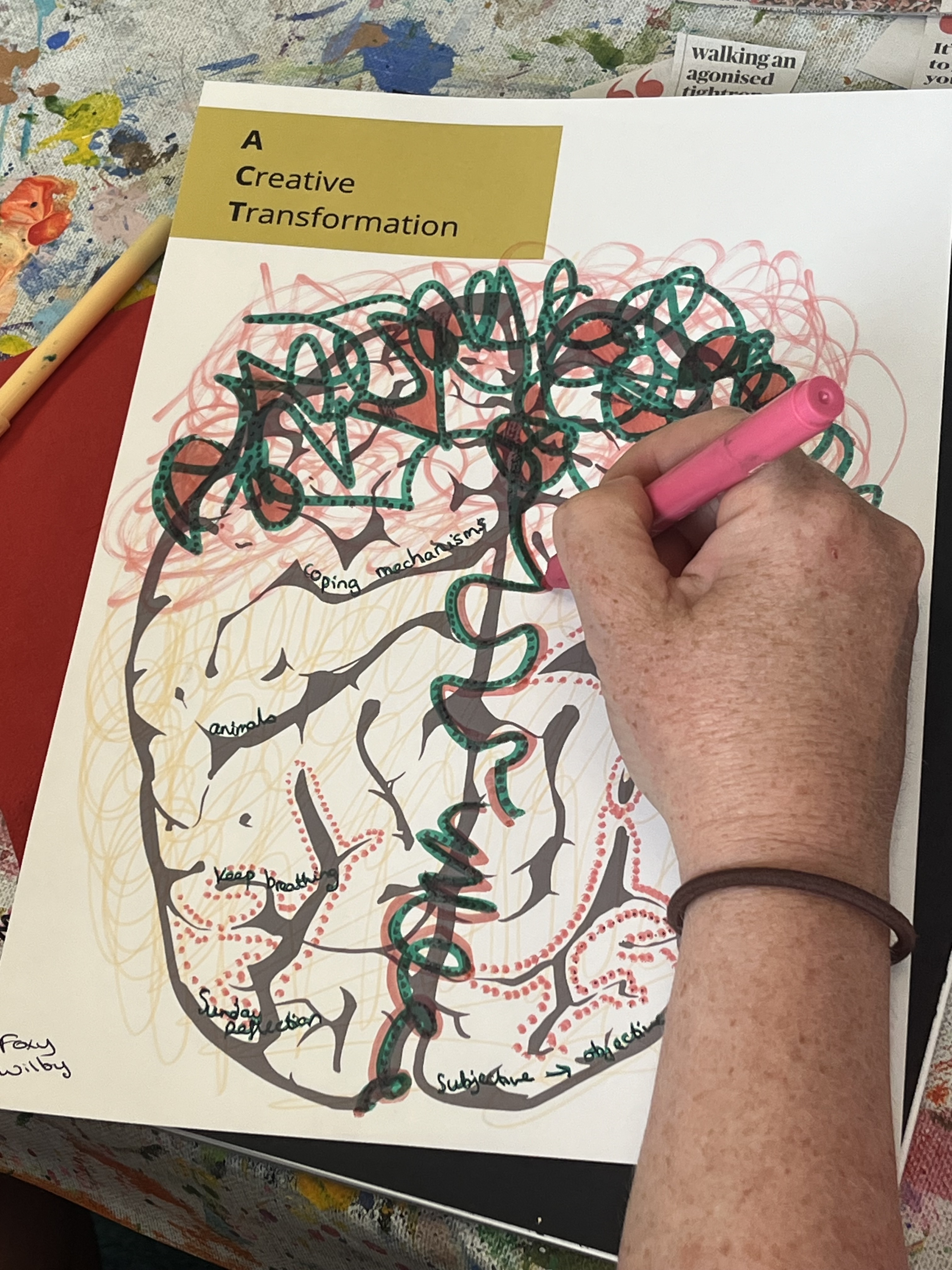
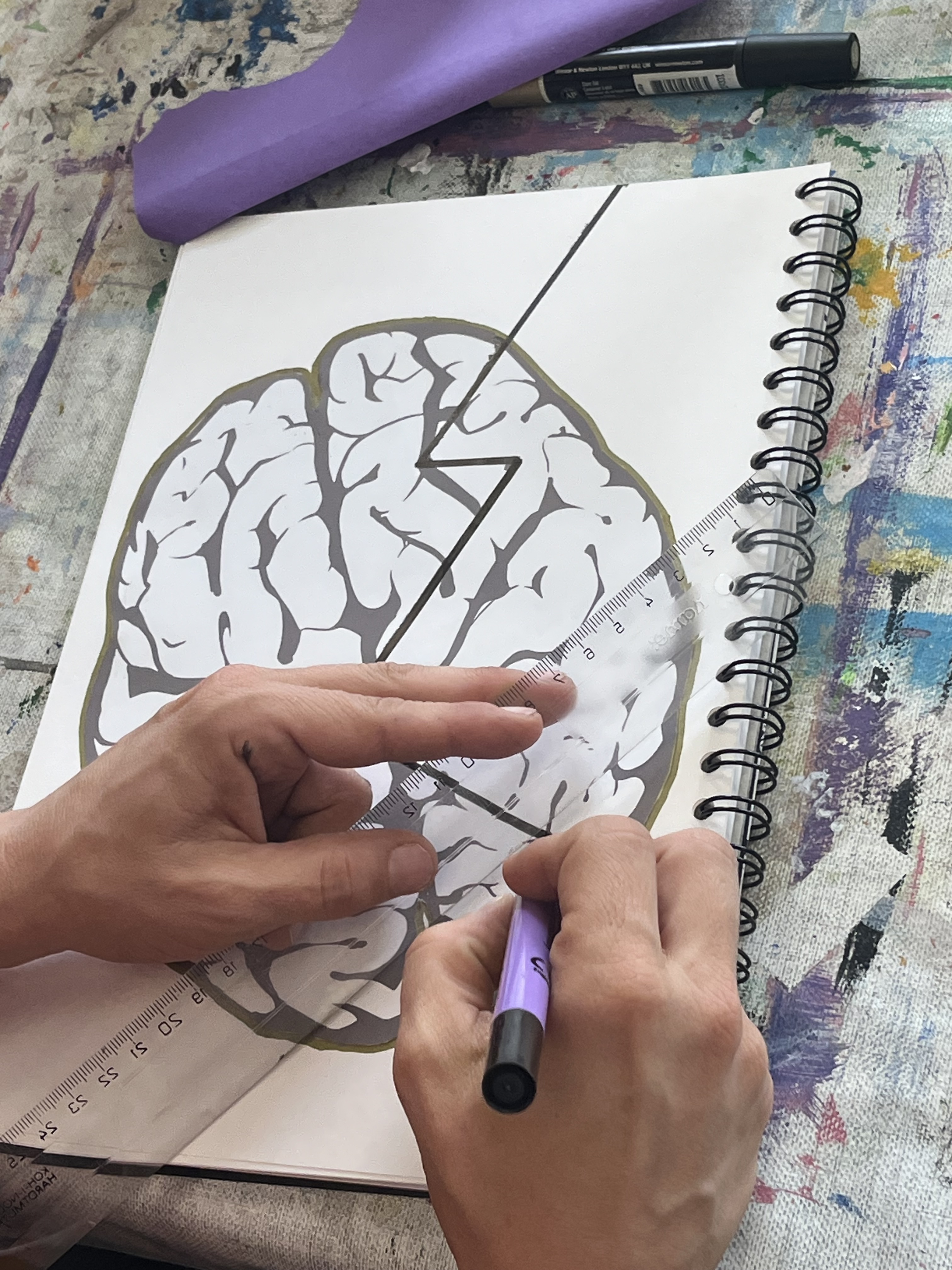
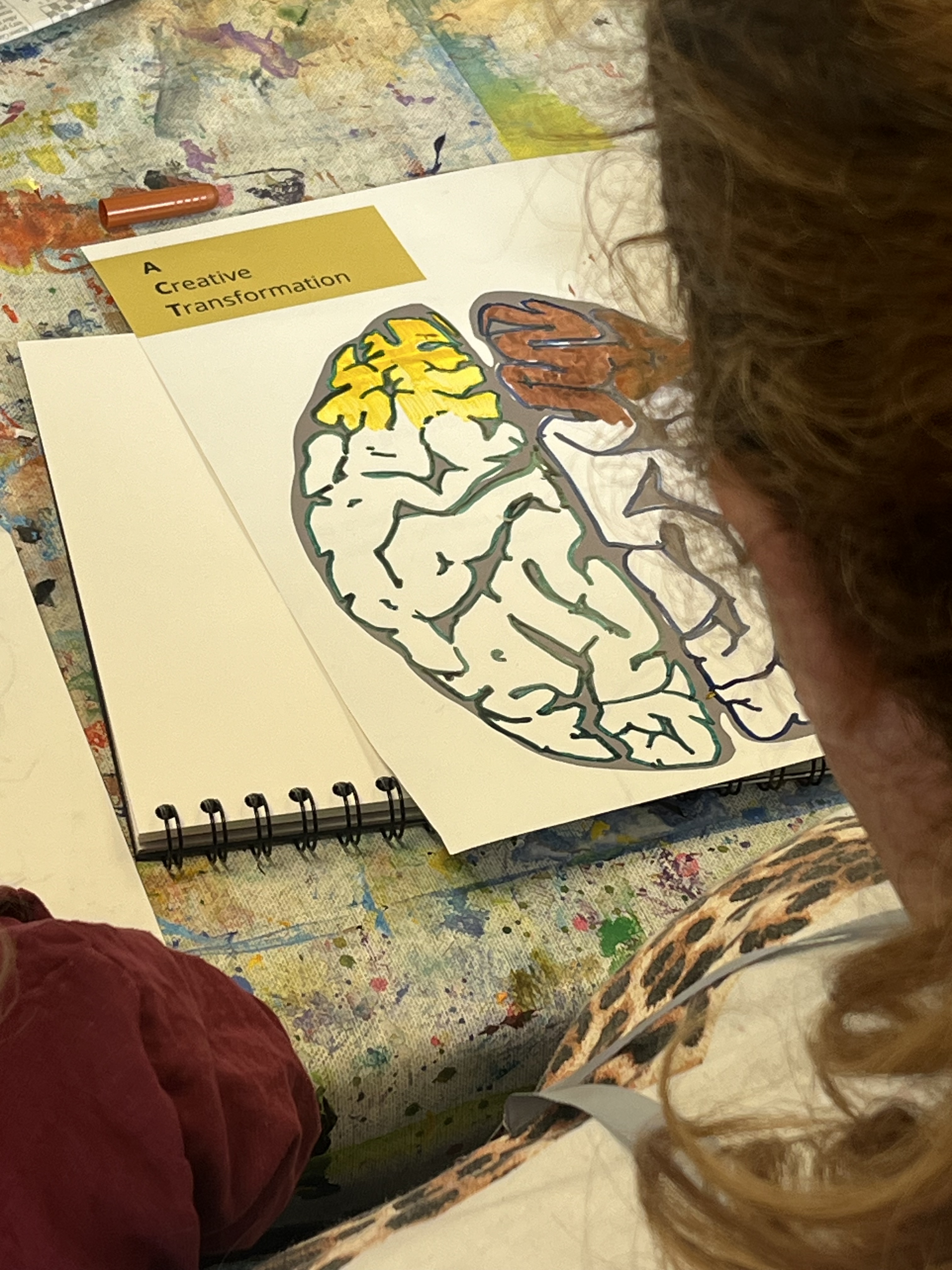
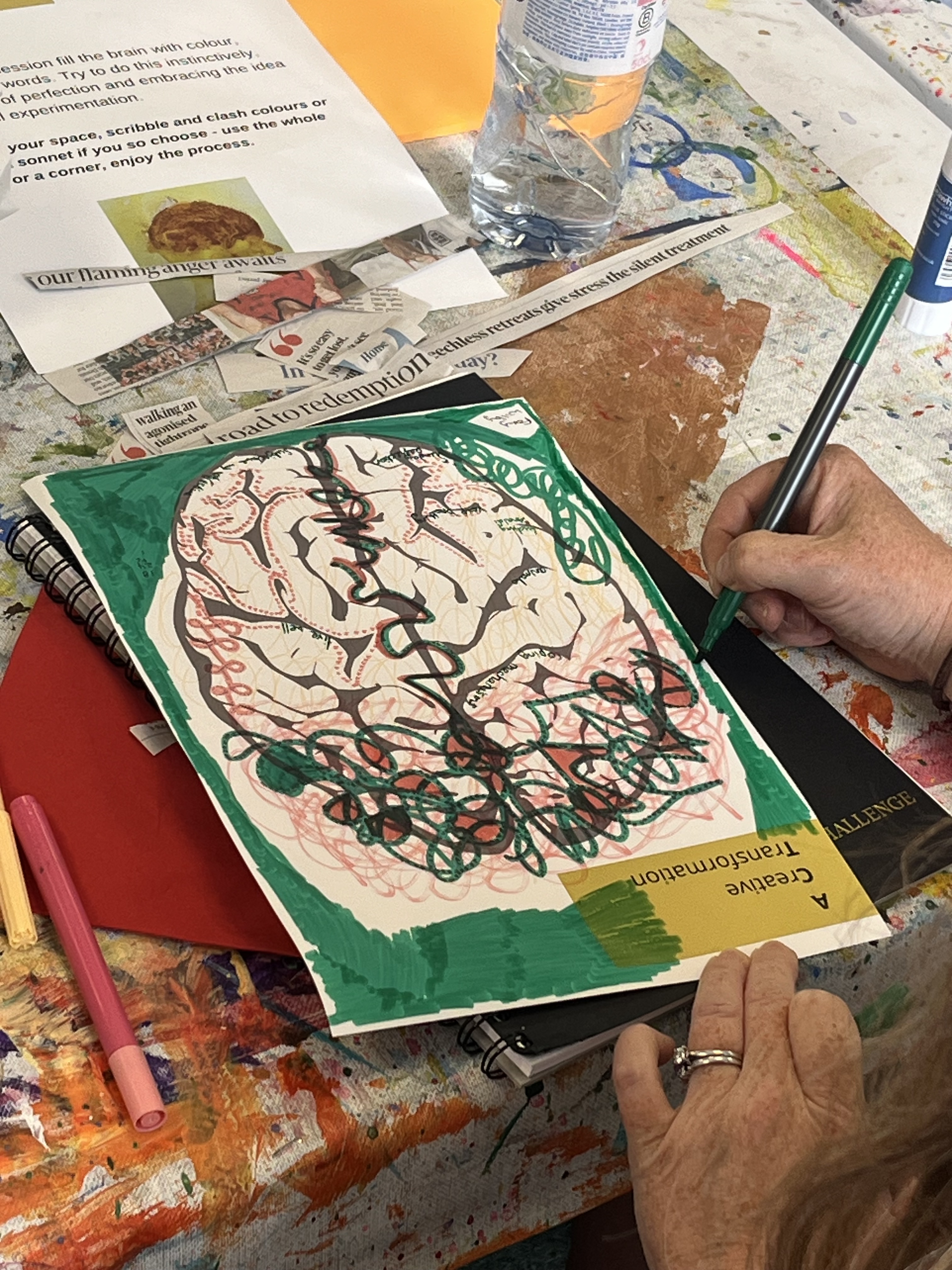
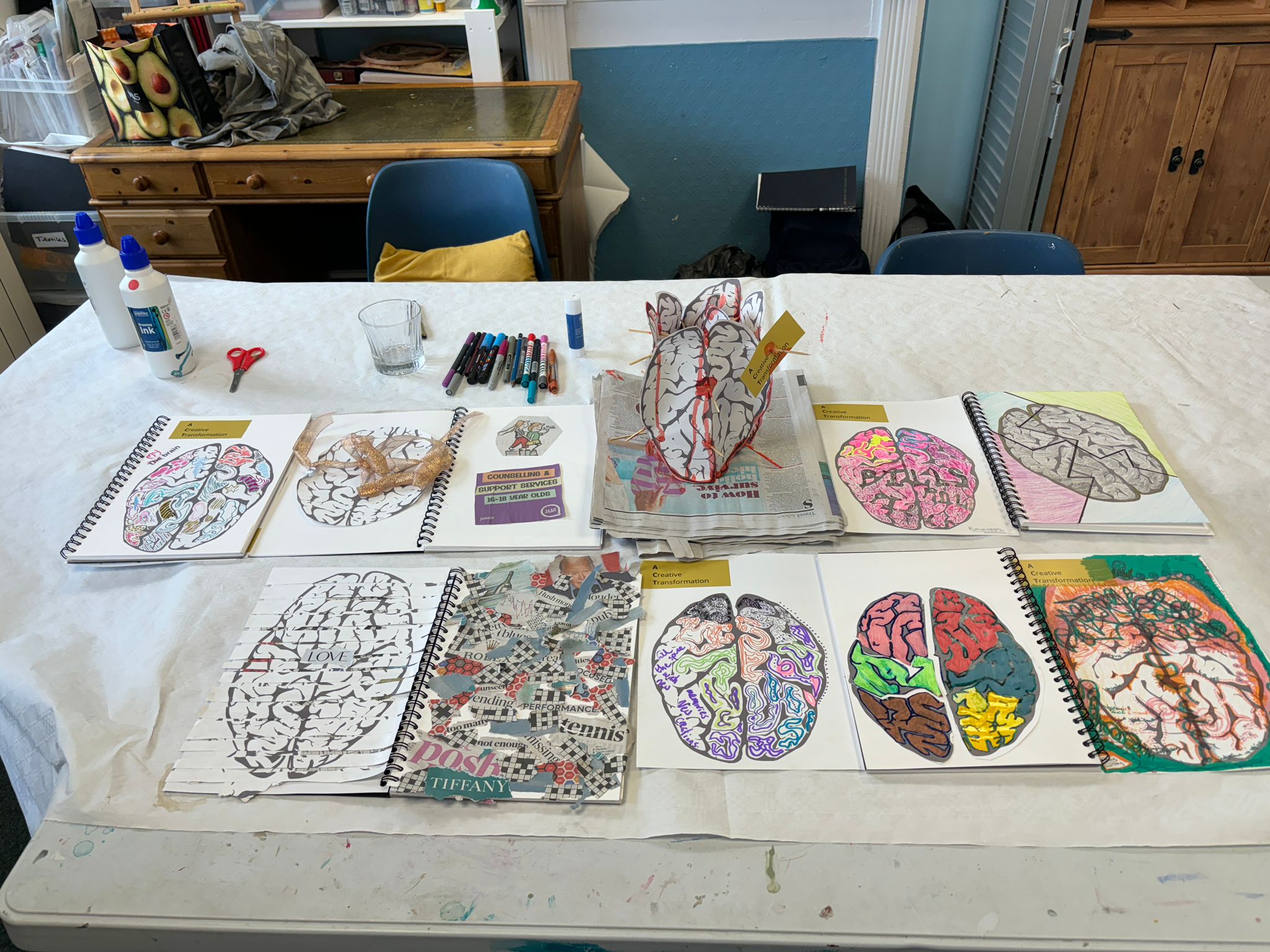
The day evolved in a very natural, organic fashion. I felt like I wasn’t doing anything, the dogs are doing most of the work. Their calm, friendly presence worked wonders. Pets As Therapy. After lunch, I simply reminded people about the handout I had given them at the beginning – the open, creative brain.
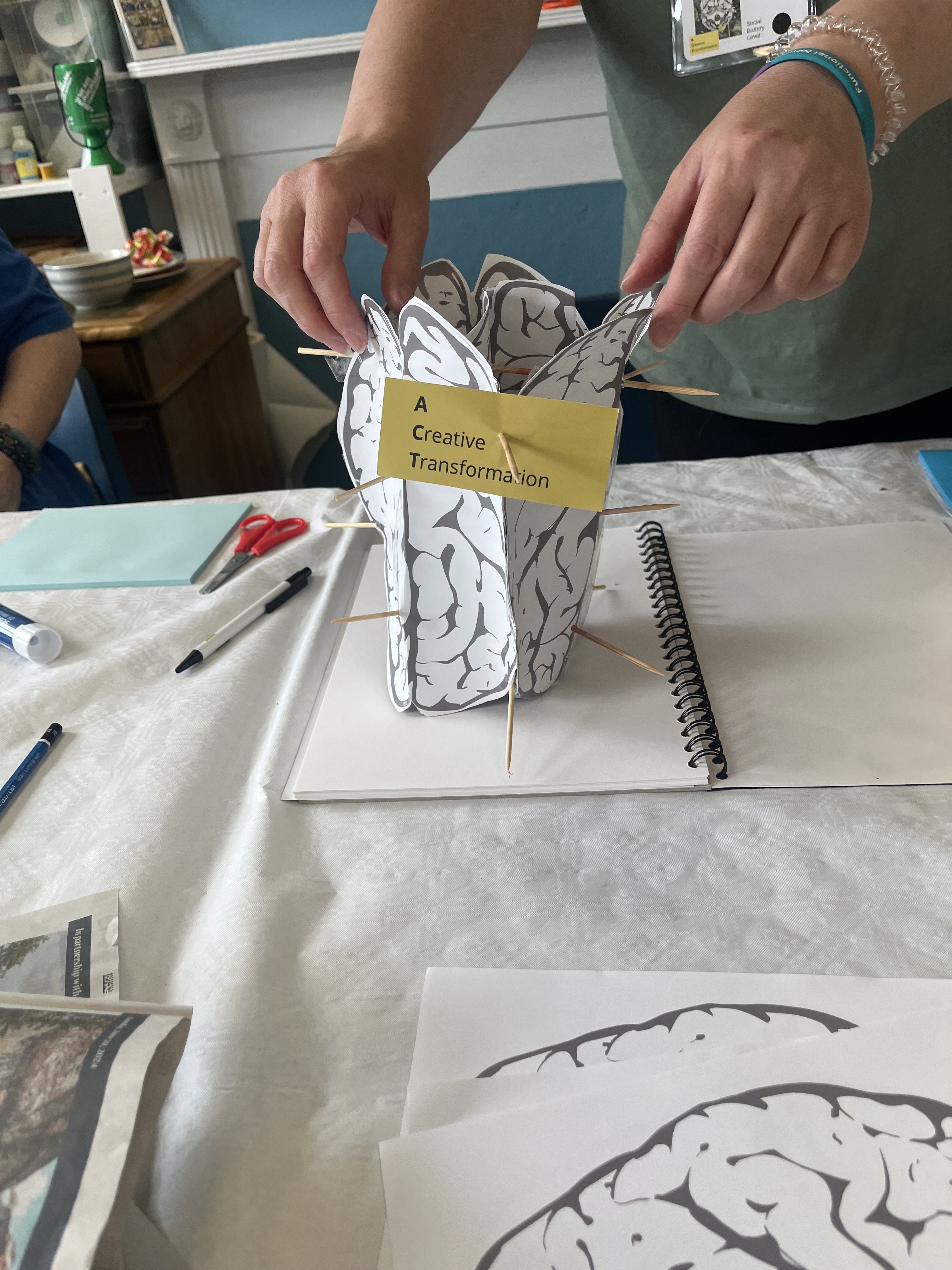
I said, ‘Turn it into your brain. Make it yours. Express your brains in whichever way you wish.’ One of the participants, whom I will call Les, has functional brain disorder which gives them non-epileptic fits. Les also has dissociative disorder. They feel isolated and have no help. They have been hospitalised multiple times for their seizures and mental illness. At the workshop, Les tore up and cut out many brains and put them together as a multifaceted assemblage, a sculpture pinned together with the sticks that the fruit was on for lunch. Les’s artwork, their brain – this sculpture is powerful, intuitive, unique, innovative and beautiful.
Everyone made their brain so differently. There was a volcano of visionary voices and perspectives in the room.
For the rest of the afternoon, we made (and repaired) our brains. We thought about the brain functionally or organically, disordered or injured, or not, disordered or not, an illness defined (or not) by diagnosis or symptoms or simply feeling dis-ease.
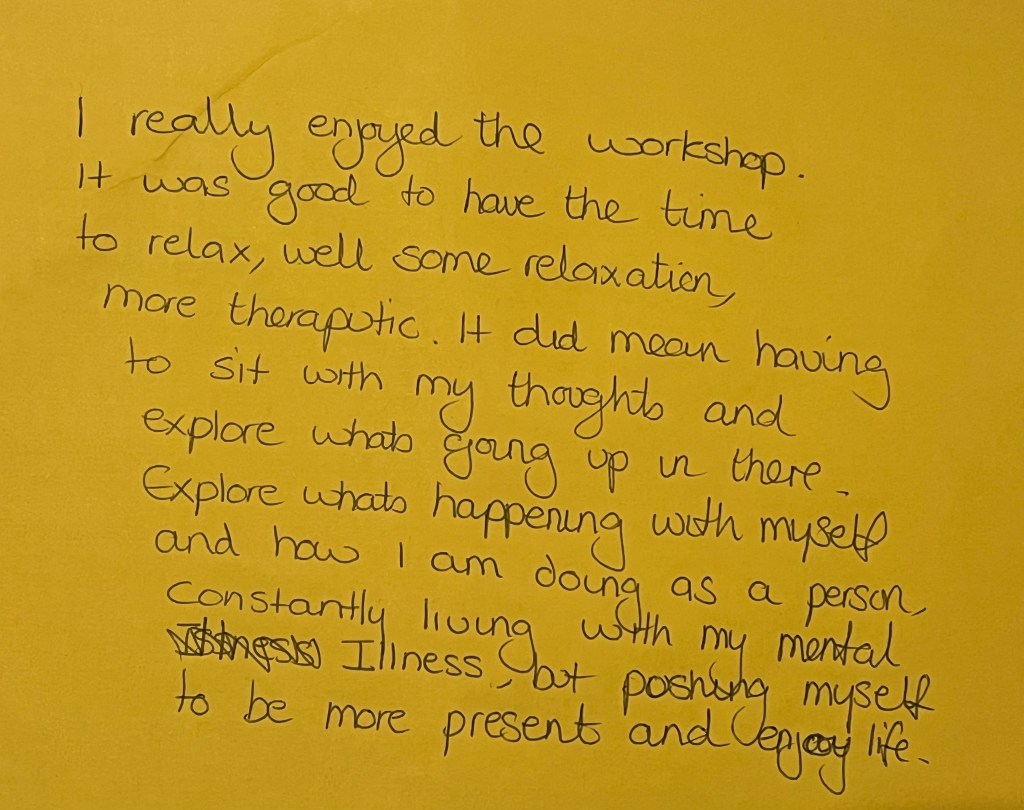
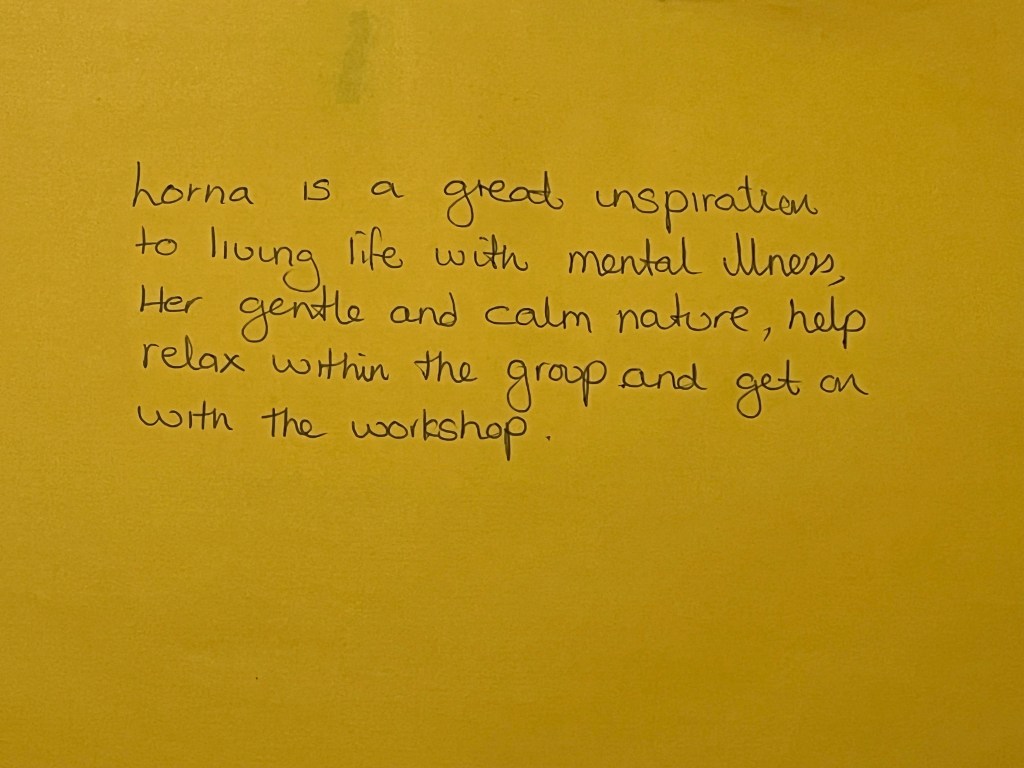
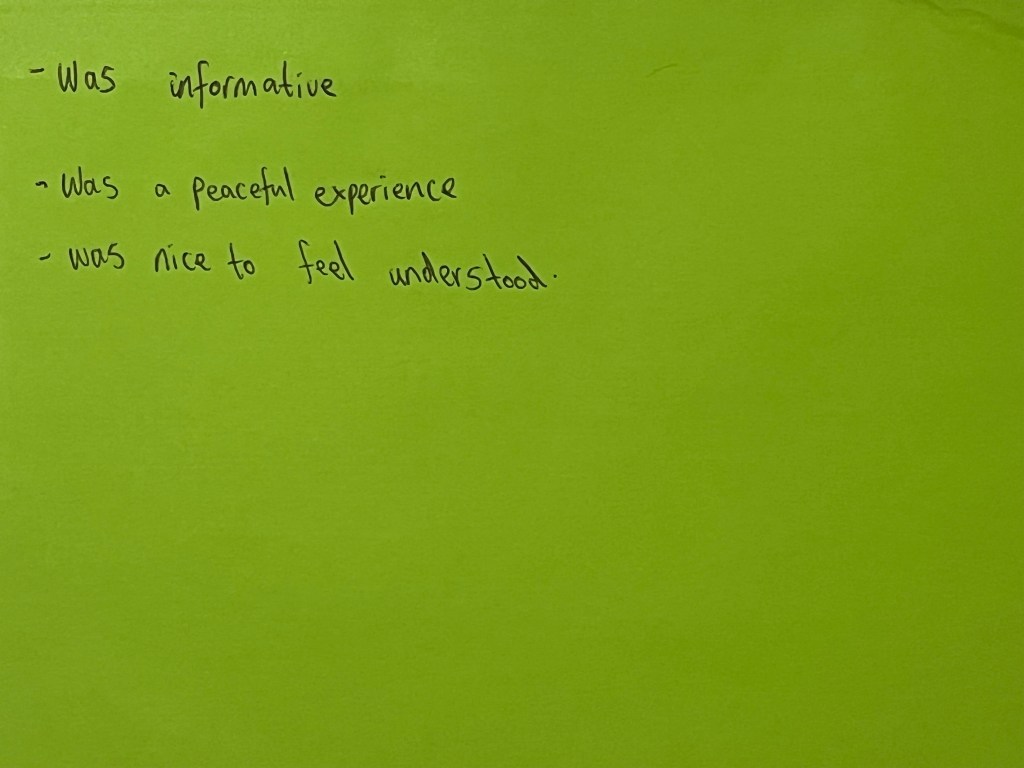
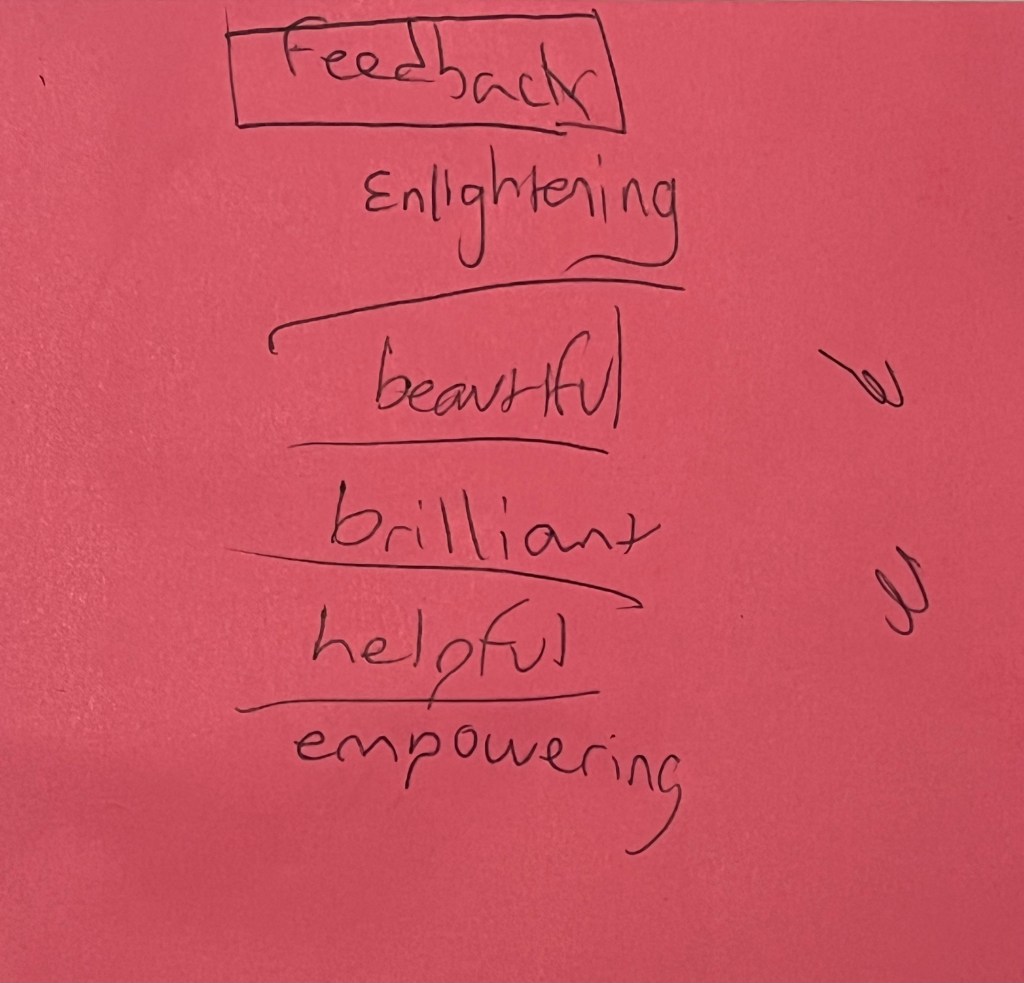
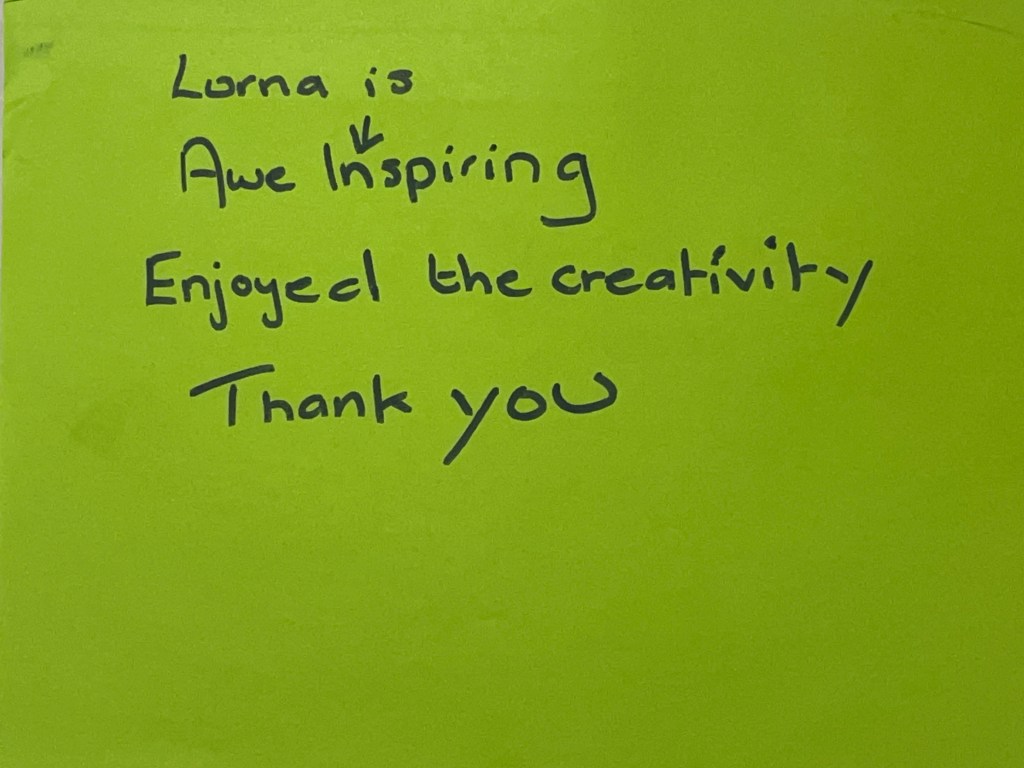
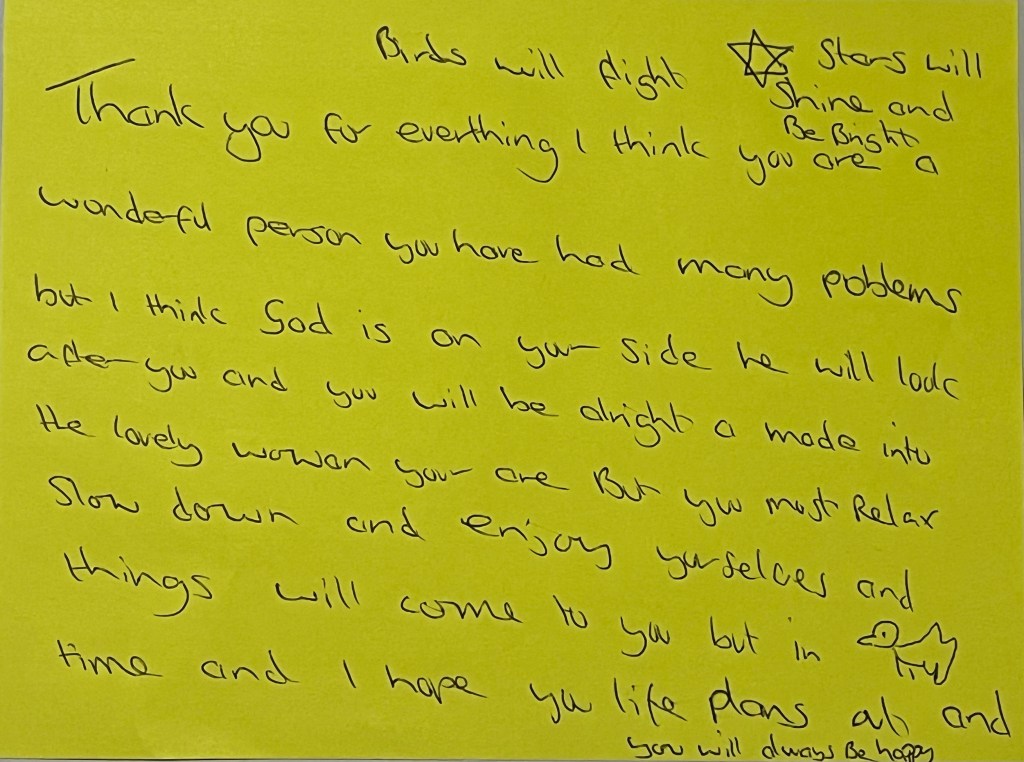
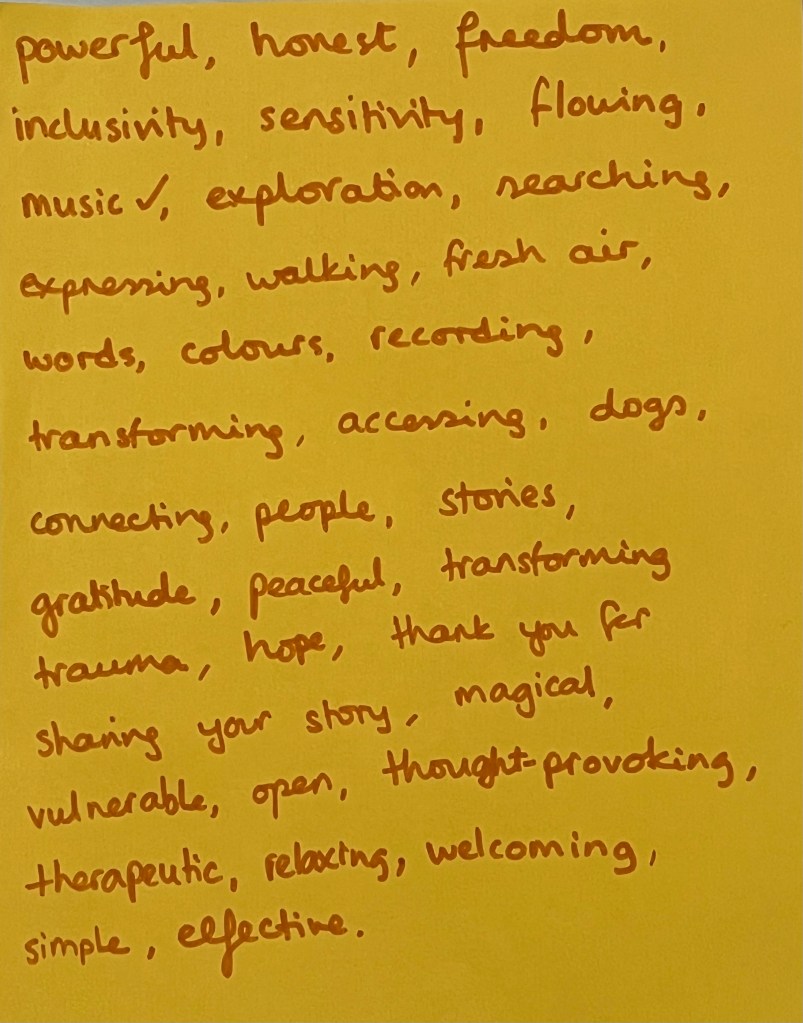
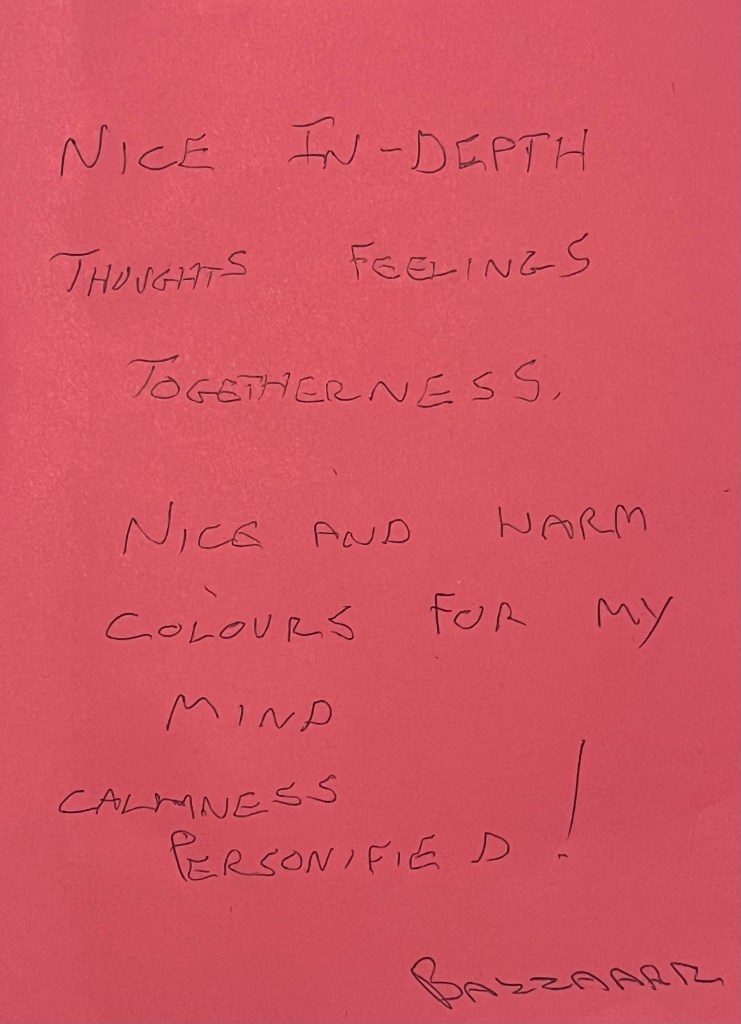
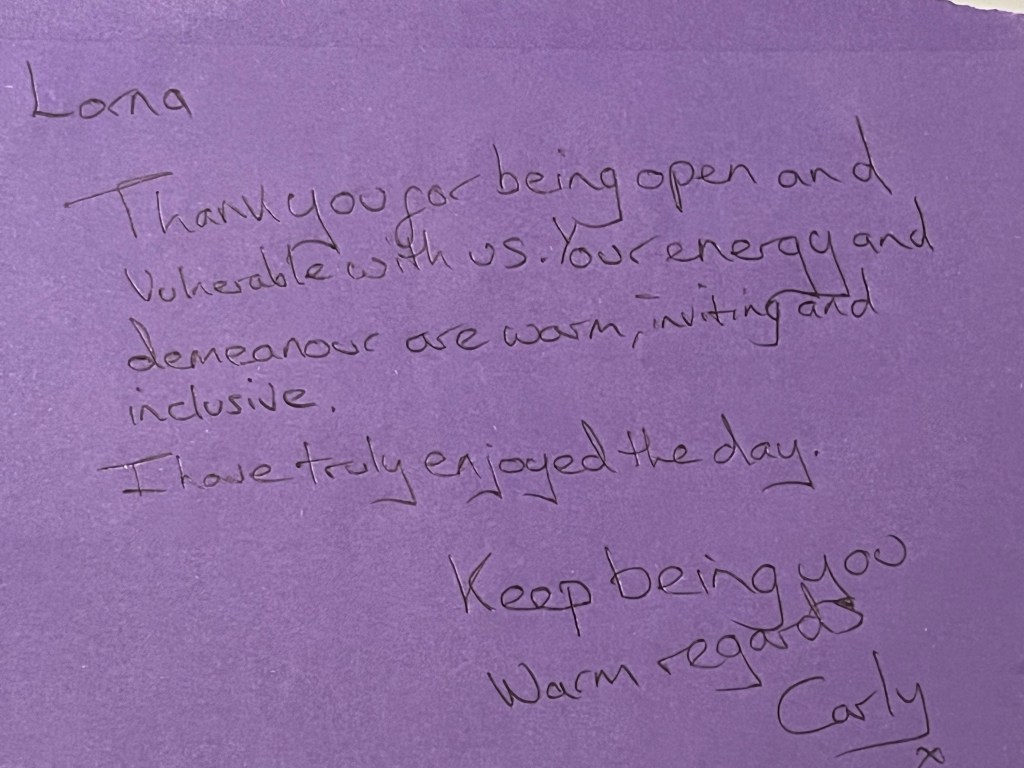
The workshop didn’t really finish. It was more of a pause and a celebration of our creative transformation, an adieu, see you again, keep going, we can do this. I felt incredibly fulfilled and nourished by meeting these participants and working with them. The feedback they gave me was awe-inspiring (that is my reaction to what they said about the workshop). Everyone was grateful.
In terms of outcomes, I would say one of the greatest outcomes came after the workshop had finished. I asked Les, who made the brain sculpture, if they wanted to go for a walk with me with the dogs, so we could connect and chat.
Les was at a high risk of having a seizure from their functional neurological disorder and Dawn Burrows (who leads art projects at the Harbour Gallery and assisted me during the workshop) was very worried that Les would have a seizure during the day, because they have been very unwell. But Les got through the day and thrived with it.
Les told me that they never go outside of her house apart from to medical appointments, they said they have no friends, and things like cooking and basic self-care are big challenges. But they came to the workshop, they participated fully, they engaged with the material and the stimulus, and we went for a normal walk around the harbour with the dogs.
As Les was telling me they never go out, I realised that here we were, going out. Chatting, being friends. So normal. Who wants to be normal? But there is something very treasured, powerful and restorative about this moment. A creative transformation is occurring. For me this is the greatest outcome of the workshop.
Also, connecting with everyone in the room was incredibly powerful. 13 people participated. Everyone was different and had different situations and different things to grapple with, but despite our differences, we connected on a very deep level and formed a community within the Harbour Gallery, within the space of the workshop, and also outside it.
I said goodbye to everyone, and then Wilby, Foxy and I collapsed in a heap on a chair and drank hot chocolate. The dogs were utterly shattered in their exhaustion. They were both utterly perfect today. What a magical day.






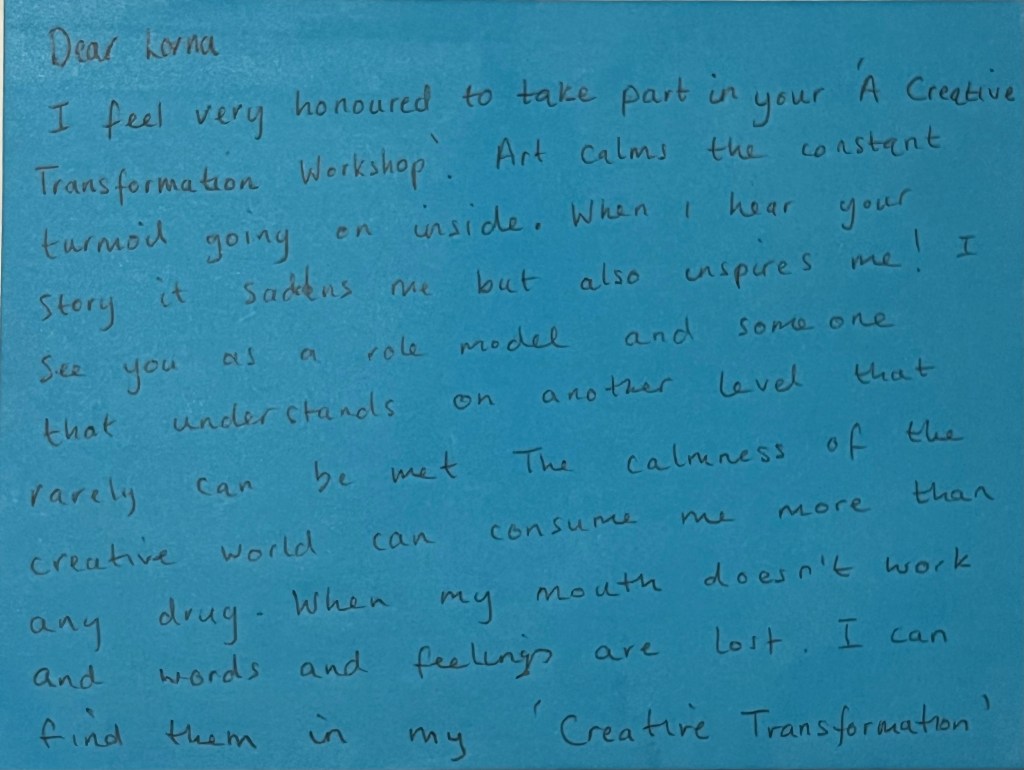
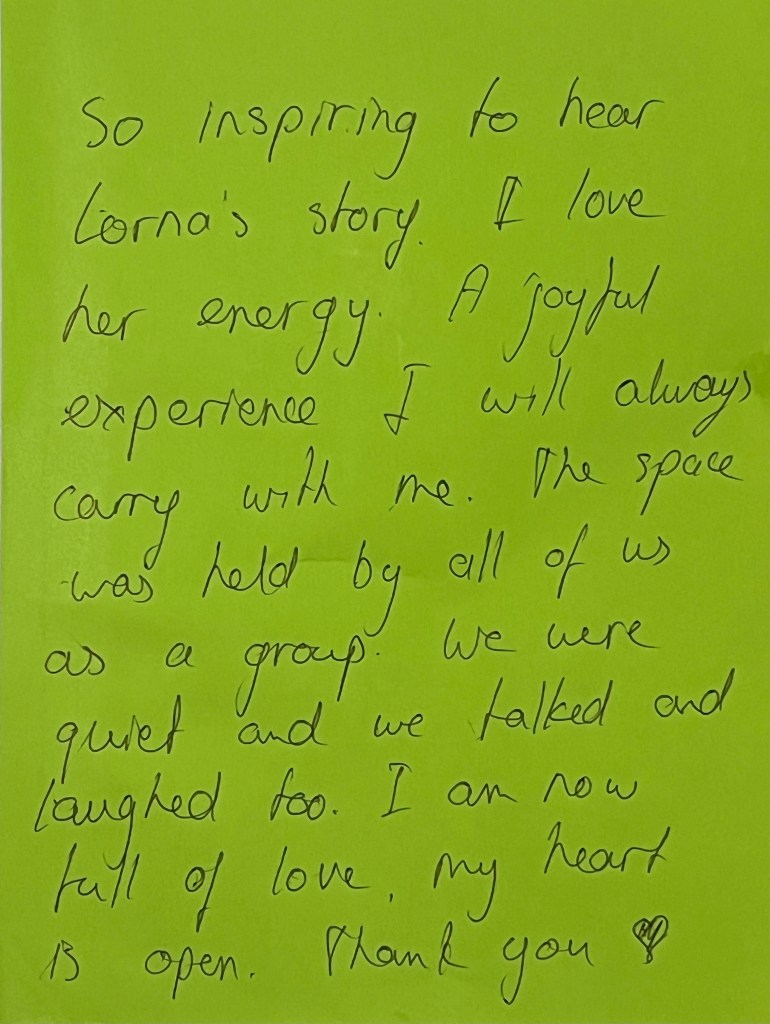
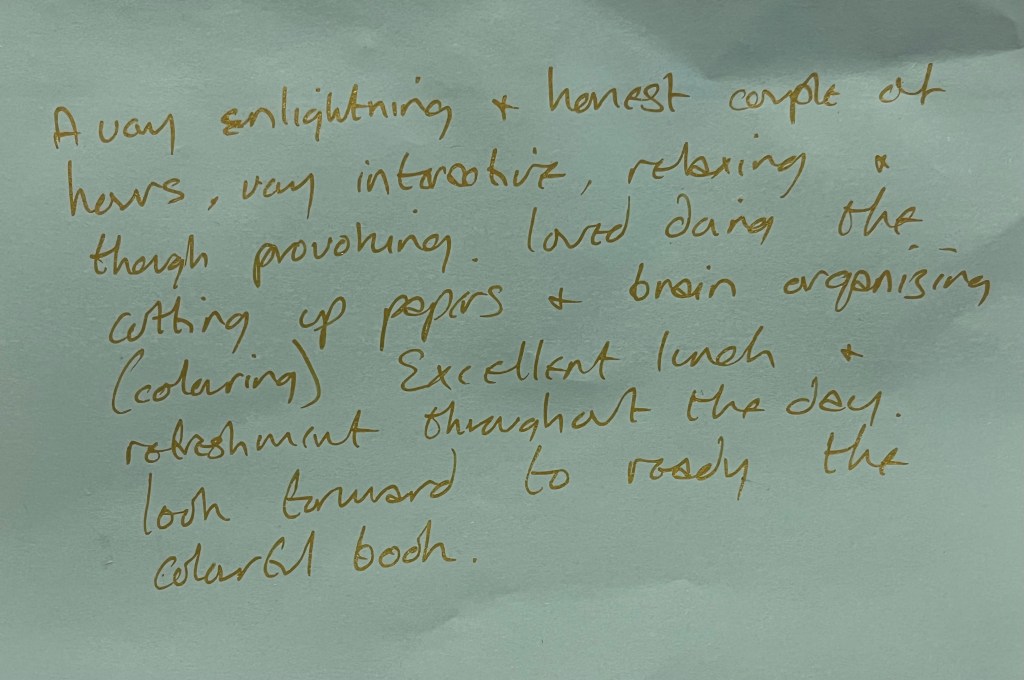
Feedback from participants in the workshop:
My talk for the launch of social prescribing in Jersey
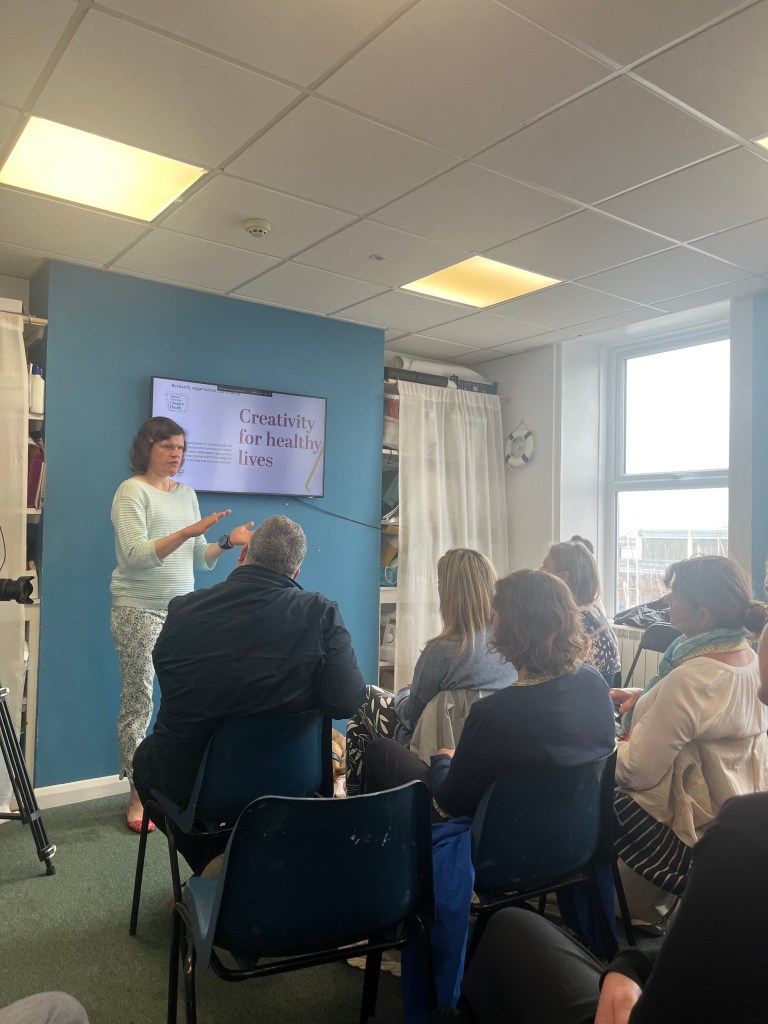
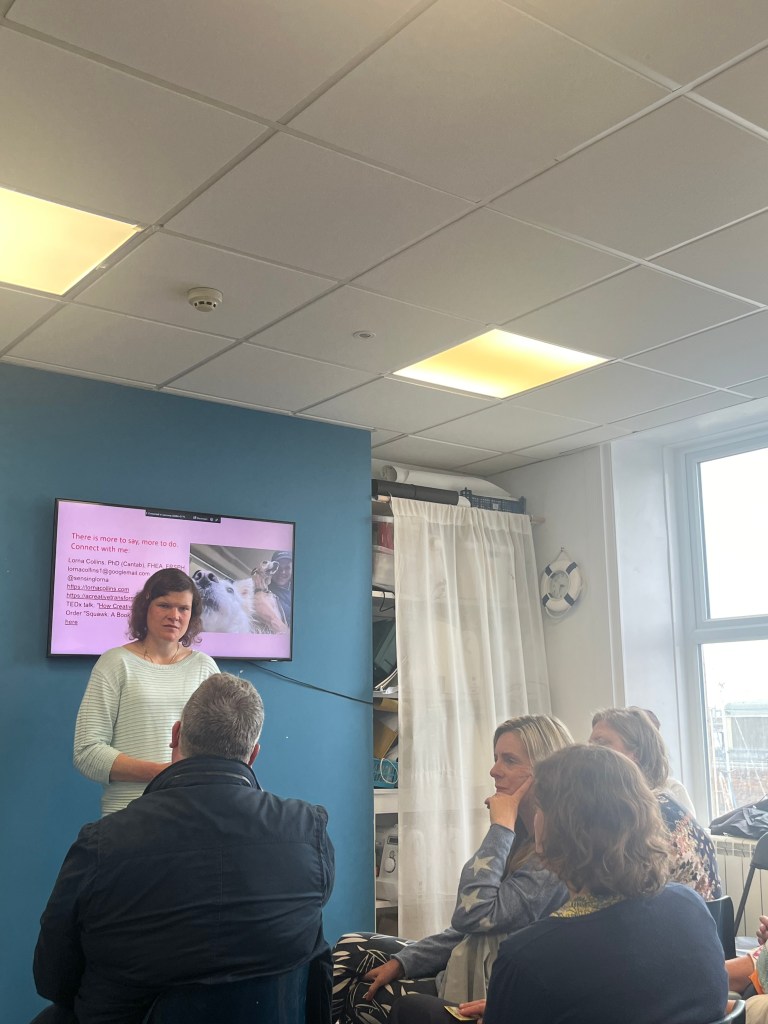
The main room in the Harbour Gallery was packed full of people who seemed excited to hear me speak about social prescribing. We had members of the civil service, heads of health charities such as the St John’s ambulance, Headway, and many other local charities in Jersey. I was due to speak about social prescribing, which is a hot new thing in the UK, being launched in Jersey with a different health system, although similar ideas and practice.
The purpose of my talk was to present my live experience of engaging with social prescribing, before it was even invented, during my illness and recovery, then my education, research and practice of social prescribing in the field of Creative Health. I also and most importantly presented my Arts Council project A Creative Transformation within the nexus of social prescribing and creative health.
I did not have any notes, but I had a PowerPoint, and I had a very engaged audience. Dawn Burrows introduced me and made me sound brilliant—no pressure!—and then I just began to speak. Beside my feet lying on the pink fleece blanket were my trusty, personal assistants Wilby and Foxy. They were the stars of the day. Trusty loyal citizens. They had their eyes on me, checking I was okay, checking I was near them, and they were quiet and calm. But they also came into my talk. I was describing how social prescribing works and invented a scenario, where upon Foxy, dear bless her, made noises in the most opportune moments, as the soundtrack of what I was saying in my talk. I had this example about someone whose name I invented, I said: ‘Brenda has a sore leg so she goes to the GP and the GP send her to the link worker who directs her to go to Aqua Zumba classes, so Brenda goes to Aqua Zumba classes instead of relying on medication, as she feels better.’
At opportune moments, Foxy grunted and whined and grumbled, perfectly in time to Brenda’s story. Everybody laughed. It was wonderful. As though I had trained Foxy.
I spoke about my life and my illness, my recovery using the arts, and then I ‘seamlessly transitioned’ (as someone described it) into talking about Creative Health and social prescribing and how they are practised in the UK with foundations in research education and policy. I had a few statistics and data, I had information about the MASc course at UCL and the various organisations and societies, which back up the practice of social prescribing. Then I talked about my project, A Creative Transformation – social prescribing in relation to the brain, trauma, mental illness, creativity, and film.
And then there were questions. The first person to ask question or comment was someone from the civil service. She said how useful it is to hear about these things because they are launching social prescribing in Jersey. Someone had an interesting question, asking: does social prescribing help people reduce their need for medication? What are the statistics for social prescribing practice and activities and a change in the need to take psychotropic medication? I did not know the answer to this question. My reply was affirmative, in the opposite way. I said, doing art and engaging with social prescribing in my own practice helps me take my medication more easily. Which is a good thing. In my situation I have a tendency to be ambivalent about taking medication, which is bad for me, whereas when I practice and use my creativity and engage with social prescribing within my daily routine, I feel more able to take my medication, which allows me to live well. Reducing my need for medication is not going to happen, in my case because of my diagnosis, but social prescribing helps me take what I need to take. Some people will always have to take medication.
I think this was quite a good answer to the question, although I said I would look up statistics and see if I could find a statistic and data social prescribing and medication.
There are lots of other questions about my art and my research in A Creative Transformation. Someone from Headway came and they brought one of their service users, who seemed very shy, but I spoke with him afterwards and he said how much he enjoyed listening to me and the content of my presentation.
People were watching the film. They all wanted to watch the film. Everyone seemed really gripped and engrossed in it and then there was a round of applause at the end, which I joined in, because the round of applause should be for the filmmakers, they have made an amazing film.
By now, Wilby and Foxy needed to go out for a little walk. I took them outside. A couple of people came with me. I forget their names. One was a tattoo artist the other was a skateboarder. They were so friendly and kind to me, Wilby and Foxy. We had a lovely walk around the harbour, sharing and chatting about creativity and life. They seemed really grateful to be here. I was really grateful to them, for their generosity of spirit and what they added to the day. A nice refreshing walk in the rain. It has been raining every day here in Jersey, but that has not dampened my spirits.
Nothing will dampen my spirits: I feel fortified, satisfied and connected with brilliant, creative people.
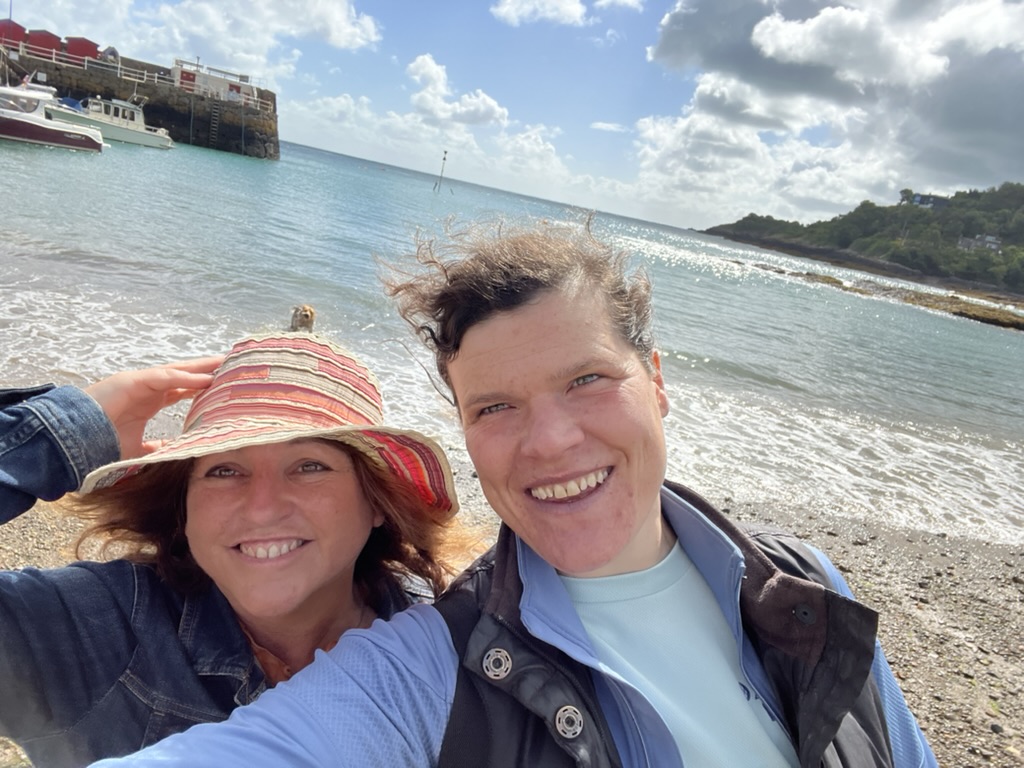
The rest of my stay in Jersey was pure respite. It gave me the opportunity to rest up and replenish my resources. I could breathe, sleep, swim in the sea, make art and relax – with Wilby and Foxy, who were thrilled to be with me. This was just what I needed.
With enormous thanks to Dawn Burrows, for her contribution to ‘A Creative Transformation’ at the workshop and the talk, her generosity, her compassion and her creativity, and to Pat Robson at the Harbour Gallery for hosting these events.
 A Creative Transformation