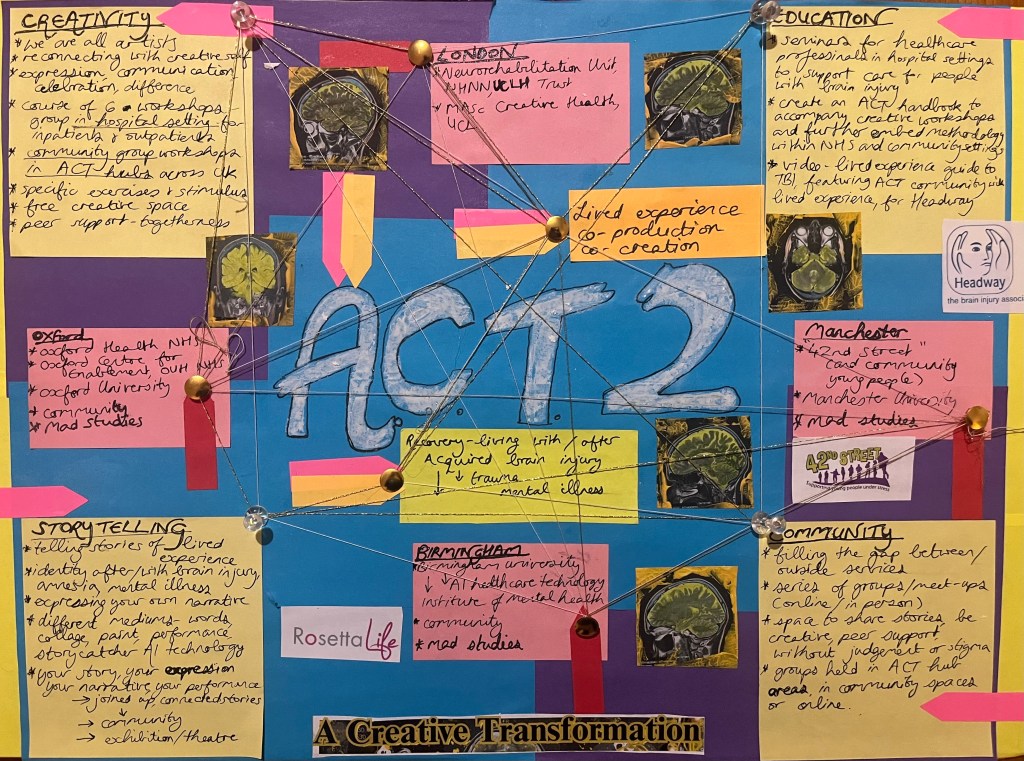
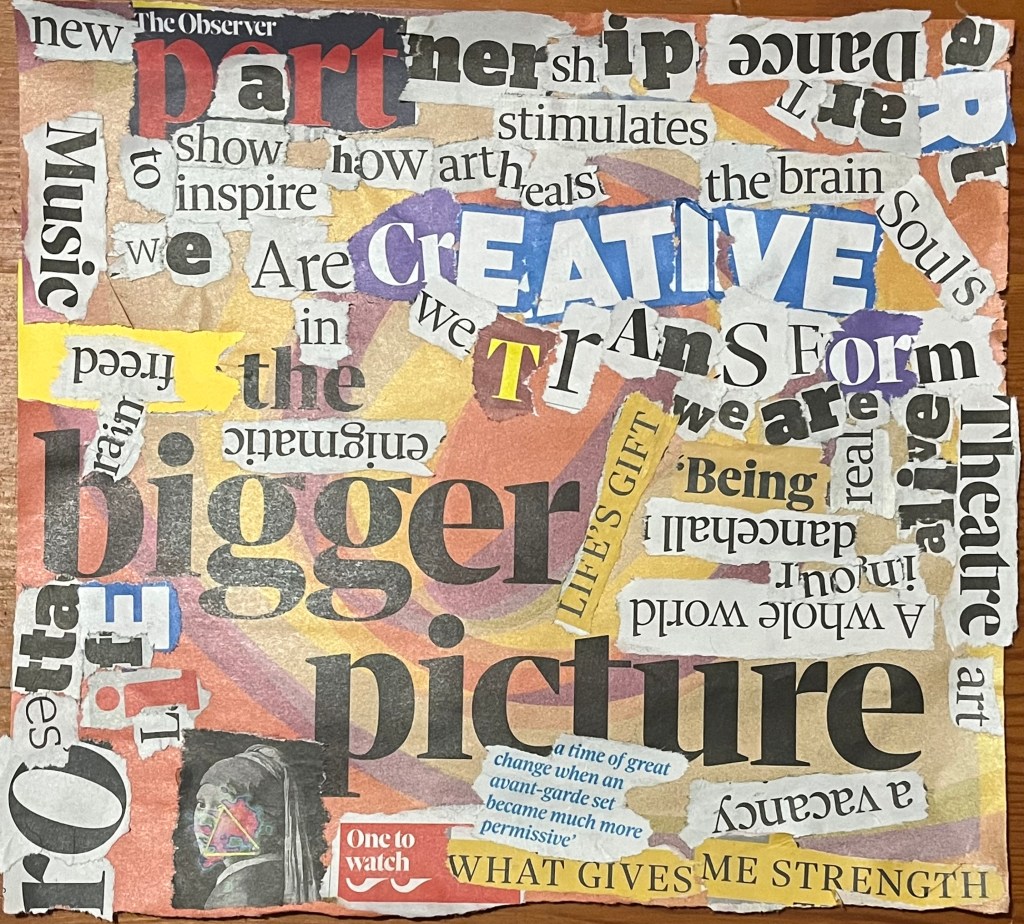
‘A Creative Transformation’, ACT 2, has taken the project around the UK, working with different mediums—visual arts, creative writing, film, AI technology—always working with people who have lived experience of acquired brain injury or a neurological condition. It has been fulfilling to develop the ACT remit and expand our community.
We ran a writing workshop for young people with brain injury and young carers at 42nd Street, in Manchester. This event was led by Ellie May Blackburn, an actor, writer, poet who has lived experience of brain injury and who was a participant in an ACT workshop last year, and is going from strength to strength, blooming with her creative career. The event was intuitive, connective and incredibly moving. One participant living with brain injury gave us feedback about her daughter, who came with her to the session, saying: ‘She has now discovered writing, as a positive thing to do that can help with her mental health.’
We ran a course of six art workshops with inpatients who have acquired brain injury or a neurological condition at the Neurorehabilitation Unit, National Hospital for Neurology and Neurosurgery on Queen’s Square. It was very rewarding to work with patients who suffer with aphasia and other cognitive/physical impairments and see them find ways to communicate and tell their stories, by engaging with the arts. The patients’ own words speak volumes about the ACT sessions. They said: ‘I’ve never drawn before. Surprised myself.’ ‘This is art. I am enjoying making art and being in the group.’ ‘I am telling the story of the pain.’ ‘It takes my mind off the many things that are bothering me.’
We held a workshop at Birmingham University, examining the brain, psychosis and AI technology. This was really challenging for many reasons and very cutting edge. As a result of this workshop, we are now looking at how to implement a smartphone application that uses AI, allowing patients to express and respond to their hallucinations – engaging with AI to create healthcare technology (medicine’s big new thing). A participant said: ‘It has been an incredibly moving and informative day where I will go away with lots of questions to ponder. I look forward to hearing more about how you use art to help heal.’
We worked with clients from Headway Surrey, making a film with them about living with brain injury, specifically filming people telling their stories about how art and nature help them as they manage their everyday lives, coping with the ongoing effects of brain injury. One highlight was working with Jo, who has to remind herself about who she is, where she is, and everything about her life, each time she wakes up in the morning. Jo tells her story in the film. She is unable to remember doing this, but the team at Headway Surrey have said that making the film has had a positive effect on Jo’s life. Jo gave us feedback, saying, ‘Thank you for this. It was lovely to see. The film is lovely. I don’t remember doing it, but it was lovely watching it.’ We learn from the team at Headway Surrey that, when the film was shared, ‘Jo cried happy tears and was truly staggered to see herself on screen and, in the moment, was able to acknowledge how well she had told her story. She had an enormous sense of pride that stayed with her throughout the rest of the day, which is a significant length of time for her to retain information, and initiated comments about the content of the film to others who visited in the afternoon.’
 A Creative Transformation